
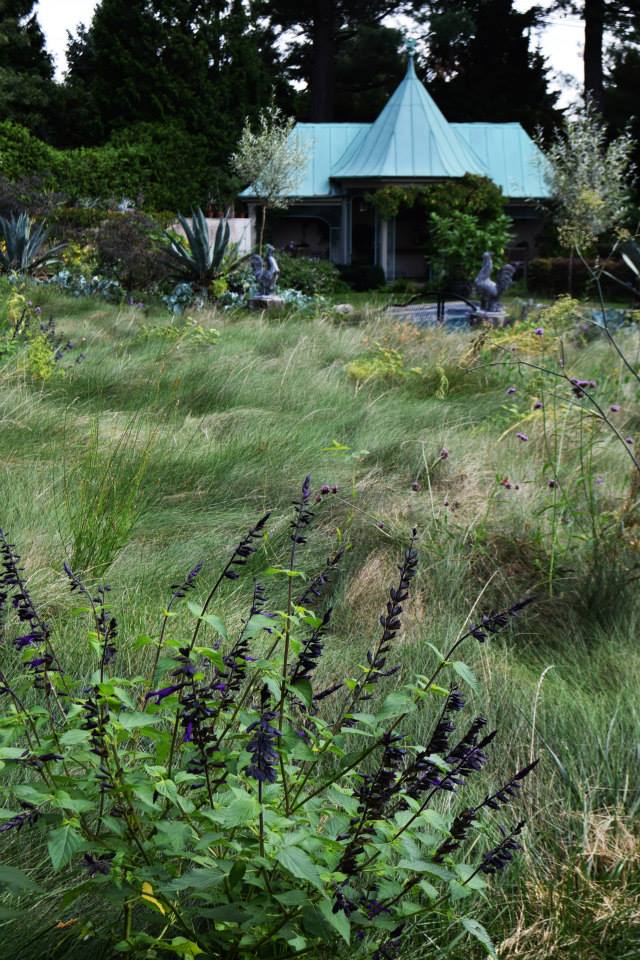
Lawns set off borders but there are more naturalistic alternatives that do not require such high maintenance. Meadows tend to incorporate a mix of longer grass and mixed meadow flowers. The flowery meadow below is a mixture of fine leaf fescues. These fescues typically clump together to form an effective textured height of about 20cm. It is suggested that these fescues are mown annually in November to a height of around 12cm. To add further interest to the meadow spring bulbs and summer annuals are mixed throughout the meadow display. These flowers help attract butterflies and other beneficial pollinators. The meadow can be framed with turf cut edging to draw the visitor’s eye to the stunning display. For the last decade many gardeners have begun to question the sustainability of mowing lawns weekly. The beauty of meadows has been rediscovered. Meadows reduce noise in the garden, machinery wear, pollution and labour. They are beneficial to pollinators and visually pleasing. They soften edges and help deter garden visitors from walking in perimeter areas by guiding their route.

 Get Planting!