Kirstenbosch National Botanic Garden

Kirstenbosch Botanic Garden is in the Cape of South Africa and was established in 1913 to preserve the country’s unique flora. It was one of the first botanic gardens in the world to have this conservation ethos. It has the dramatic backdrop of the slopes of Table Mountain behind it and it effectively blends a natural landscape with a manicured garden beautifully. The plantings change and develop throughout the garden. There are great combinations of agapanthus and sculptural natives. Many of the plants you will recognise and soon remember that this is their native homeland. The collection flows and has a wonderful naturalistic display as you move away from the buildings. It is a wonderful experience to see thickets of Protea and Strelitzia. Sunbirds flitter and dance throughout the garden. Panoramic views can be seen of the landscape as there are many dramatic view points throughout the garden. There are no boundaries towards the upper areas of the garden and here you can walk up the Skeleton Gorge. This route can be accessed to reach the top of Table Mountain and is popular with tourists and walkers.

10444548_10152428380998546_4160781578565800170_n

Super Salvias

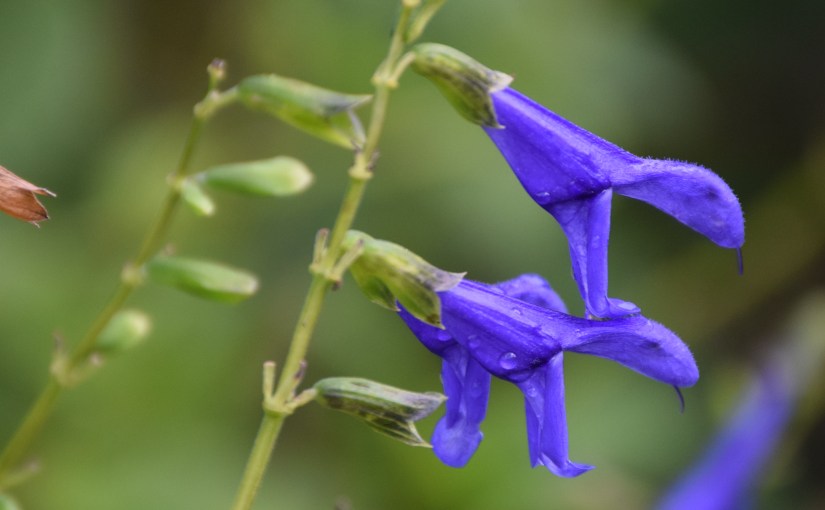
Salvias are fantastic plants to grow and they provide a vast array of colours that will brighten any garden. They have a fragrant foliage and are excellent at attracting pollinators. These plants just scream summer – with so many available they will suit everyone’s taste. Salvias are very diverse and can be used in containers, borders and as ground cover. Salvias can range from annuals, to hardy and long blooming herbaceous and evergreen perennials. Most can be propagated by seed or cuttings.  Salvia nemorosa ‘Caradonna’ flowers beautifully between the last of spring bulbs and the beginning of early summer perennials.  It prefers full sun and requires no staking and typically can re-flower again in late summer.

DSC_0264

Tree Seats

A tree seat creates a sociable and relaxing area within a garden. The seat can generate a calming atmosphere that allows the visitor to view the tree canopy and garden from all angles. It can also draw visitors to an unusual specimen tree and help highlight its interest. A tree seat also provides shade from the sun for the visitor allowing a place to sit and admire nature. The seat wraps around the trunk of the tree and it can be enhanced by painting the seat white to lighten the area and focus the visitor’s eye. The seat can be made out of metal or wood to create a contemporary or rustic feel to the garden.

DSC_0365

Plants with Purpose

Plants can be used and viewed as functional objects. They connect the garden together and highlight the visual appeal.  A plant shouldn’t be put in a garden unless it has a purpose.  Some typical plant uses are listed below:

Structure

Screening

Foliage Colour

Floral display

Texture

Softening of garden features

Places for the eye to rest

Plants can be used in masses, others as individual specimens, and others in challenging growing conditions. It is also important to be unsentimental about plants once their purpose has past and then remove them. This helps rejuvenate areas in the garden and helps provide space for new plants. It allows the theme of the garden to continue and flow. The personality of a plant is also an important point to consider. Is the plant best as a lone specimen in a pot or better used continuously throughout a bed for contrast and visual interest?  Plants can help define a space, create and open closed areas as well as frame views. Think about your future plant choice wisely!

DSC_0906

Container Culture

A container is the ideal example of horticulture theatrics. Pots can be moved to various positions and changed multiple times throughout to year to add colour and interest. Containers can also be a great place for small trees or shrubs to grow before being transplanted into the open ground. Containers allow us to play with planting combinations. Containers can range from a spectacular showpiece in a courtyard to a series of containers used to screen a view or brighten an area. Bigger containers are more dramatic and provide more room for planting combinations. It is important to make sure the container has good drainage and compost for the plant to last the season. Dark containers heat up in the sun and are good for early spring plant combinations.

DSC_0963


Chanticleer

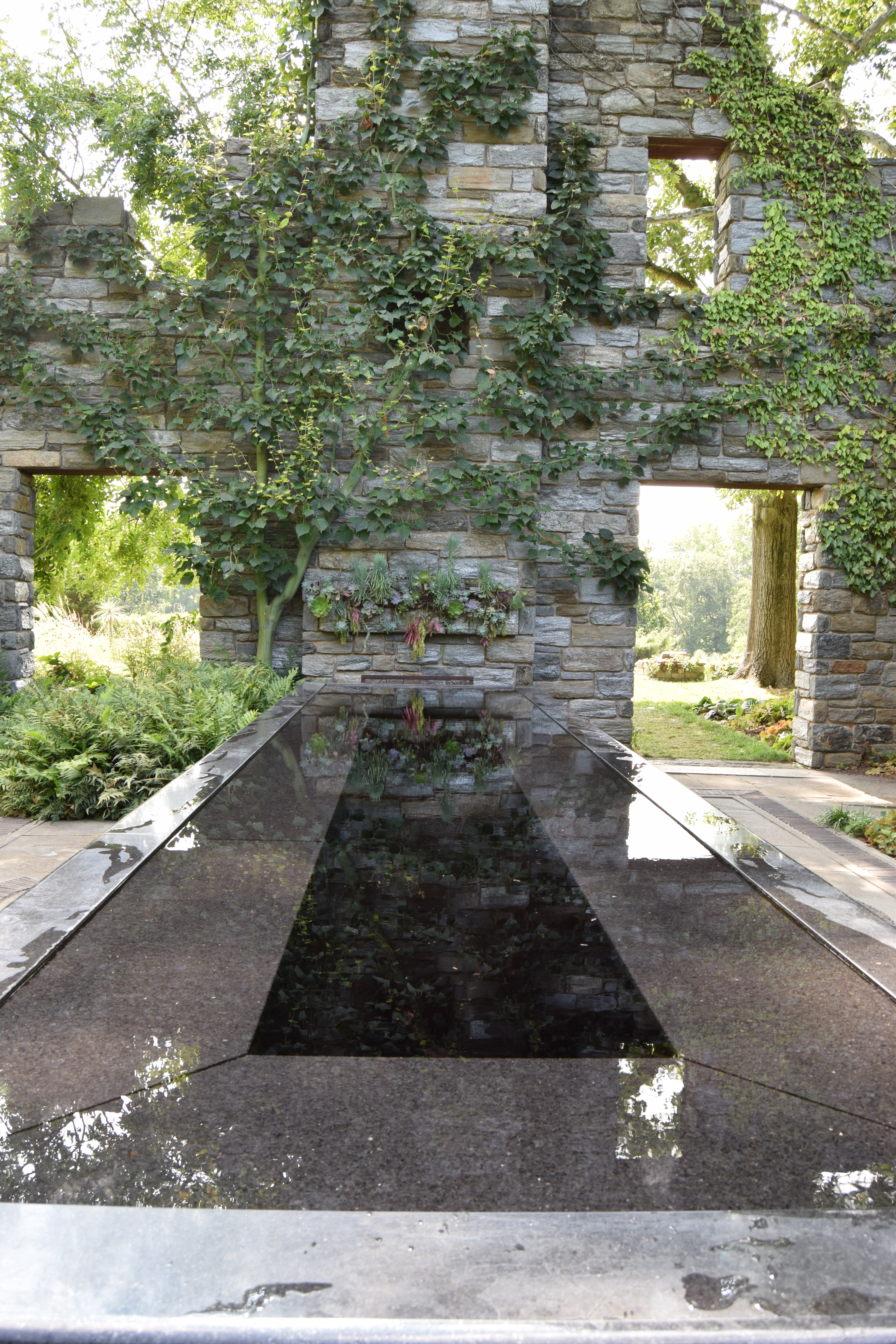
This romantic and dreamy garden is wonderful to visit.  It is one of the most attractive and imaginative public gardens in America and a contemporary garden within a historic setting. It has 48 acres of rolling landscape, mature trees and a meandering creek. The famous Chanticleer house sits majestically over a sweeping landscape downwards to the west. The garden is divided into various garden rooms featuring different planting combinations and features and each area has its own unique microclimate. The garden design effectively  maximizes the potential of shaded and sunny locations by planting species that will grow best in each environment. Light is cast in different areas of the garden, vistas draw you in, and planting combinations both inspire and provide a relaxing oasis for the visitor.  The garden was originally established by Adolph G. Rosengarten who was the grandson of a German immigrant to America who founded a pharmaceutical business that became part of Merck & Co in 1927. The Rosengartens named their home after Chanticlere in Thackeray’s novel ‘The Newcomers’.  Chanticleer is also the French word for rooster and this theme runs throughout the property. More than 5,000 plants are currently documented and grown in the garden.

DSC_0873

DSC_0872

Flowering Lawns

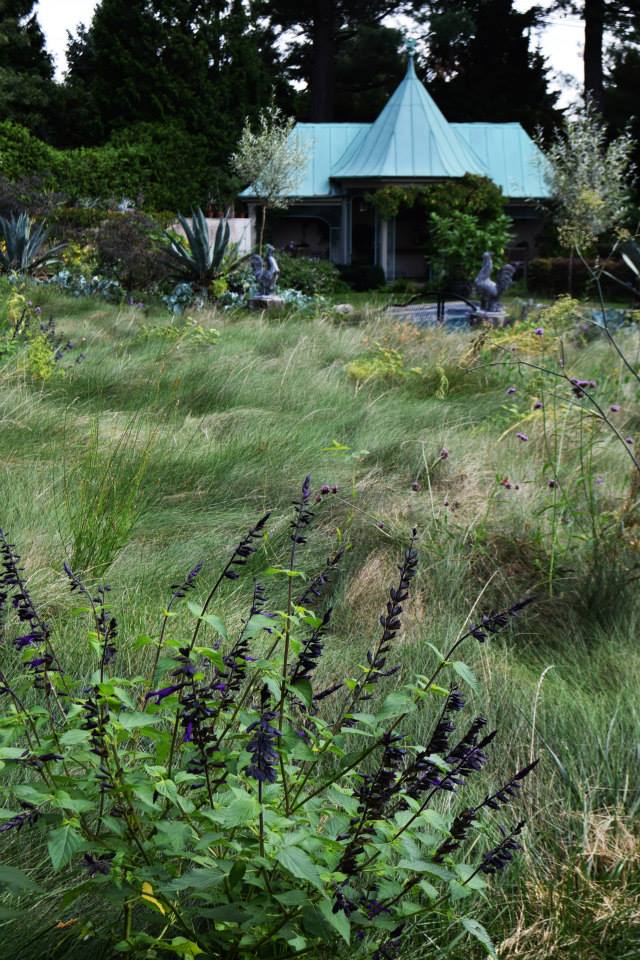
Lawns set off borders but there are more naturalistic alternatives that do not require such high maintenance. Meadows tend to incorporate a mix of longer grass and mixed meadow flowers. The flowery meadow below is a mixture of fine leaf fescues. These fescues typically clump together to form an effective textured height of about 20cm. It is suggested that these fescues are mown annually in November to a height of around 12cm. To add further interest to the meadow spring bulbs and summer annuals are mixed throughout the meadow display.  These flowers help attract butterflies and other beneficial pollinators. The meadow can be framed with turf cut edging to draw the visitor’s eye to the stunning display.  For the last decade many gardeners have begun to question the sustainability of mowing lawns weekly. The beauty of meadows has been rediscovered. Meadows reduce noise in the garden, machinery wear, pollution and labour. They are beneficial to pollinators and visually pleasing. They soften edges and help deter garden visitors from walking in perimeter areas by guiding their route.

11988405_10153178520208546_5325596439824583933_n

Flowering Bulbs (Geophytes)

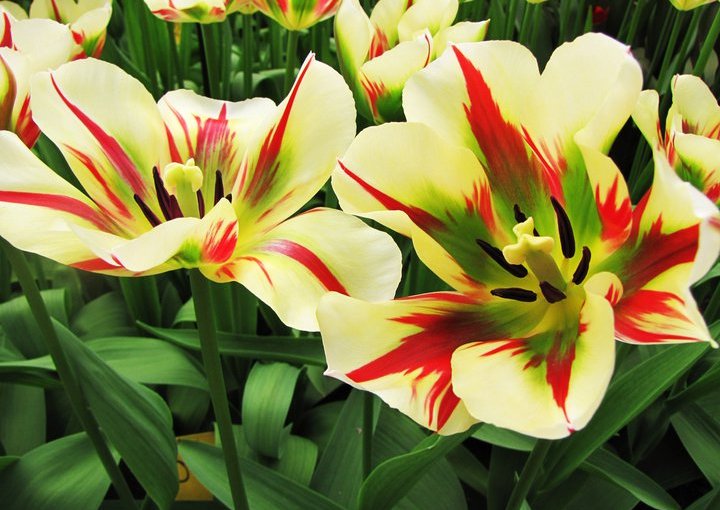
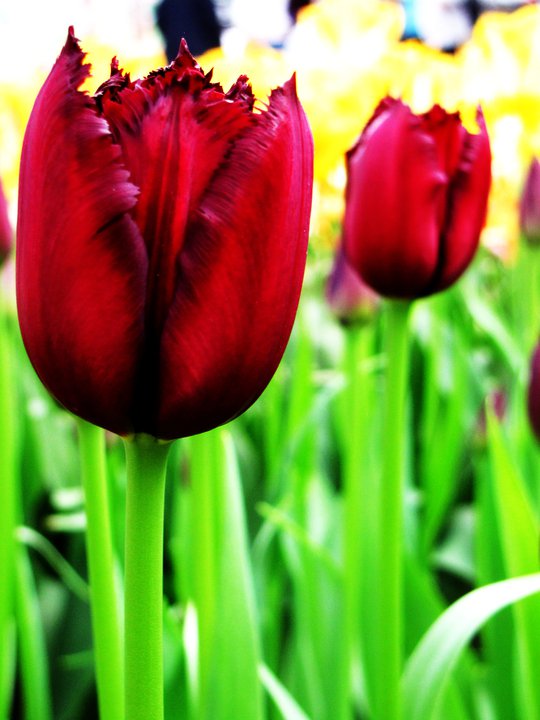
Bulbs are beautiful yet short lived by producing a great floral display at once, storing food for the following year, then becoming dormant. The bulb itself is essentially a large storage organ. For successful blooms the following year the foliage must be allowed to ripen naturally and not be cut back until it dries and turns brown. Inter-planting with other attractive plants helps disguise dying foliage. Botanists and horticulturalists refer to this group as ‘geophytes’ which is a plant with a bulb, tuber, corm or some other storage structure. Bulbs are typically most widely seen in spring eg. tulips and daffodils, but there are some summer bulbs like lilies and autumn bulbs such as Colchicums. Bulbs can be used in beds, woodland, lawns and containers. Sweeps of vibrant bulbs add colour to perennial borders while other plants are dormant. The vast majority of bulbs are planted or transplanted when dormant. Small bulbs can be planted with a bulb planter that removes a small plug of the soil. For larger bulbs a large fuel powered drill can even be used or long handled bulb planter.

216648_10150148194193546_2819997_n

Entering another world – Moon Gate

First impressions in a garden are very important. Entrances and gateways must make a clear statement to draw visitors into the garden. A change of areas in a garden can bring an element of drama into the space. A moon-gate has been used in Chinese gardens have an expressive purpose. They frame the garden and signal a new space lies ahead. It also has the ability to highlight the view capturing a sense of adventure for the visitor.

DSC_0080 (2)