Crathes Castle

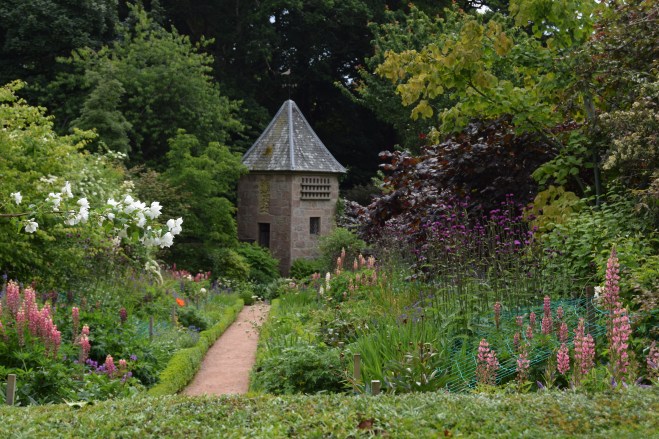
One of the National Trust for Scotland’s flagship gardens. The walled garden at Crathes Castle near Aberdeen is world class and worth exploring, particularly during the summer. It is one of the UK’s most northerly Arts and Crafts Gardens which Gertrude Jekyll visited and influenced. The walled garden is positioned South East of the Castle and covers 3.75 acres. It is divided into 8 sections or ‘garden rooms.’ The diversity of shrubs, plants and trees is outstanding. Much of the framework of the garden is made up of yew which dates from the 1700s which adds a magical charm to the atmosphere. There are superb glasshouses with vines and peaches and also a display of tender plants and the Malmaison carnations. These carnations came from France where its large flower that was scented soon became popular in the 19th century. Many in the past would reach 6ft with blooms reaching 15cm wide which were hugely popular in country homes.  The white plantings at Crathes pre date that of the famous Sissinghurst white garden. There is also a perfectly manicured croquet law, fountain, rose garden and world renowned June borders which provide outstanding summer hues. Outside the walled garden there are large areas of woodland to explore as well as the castle itself.

dsc_0065


dsc_0057

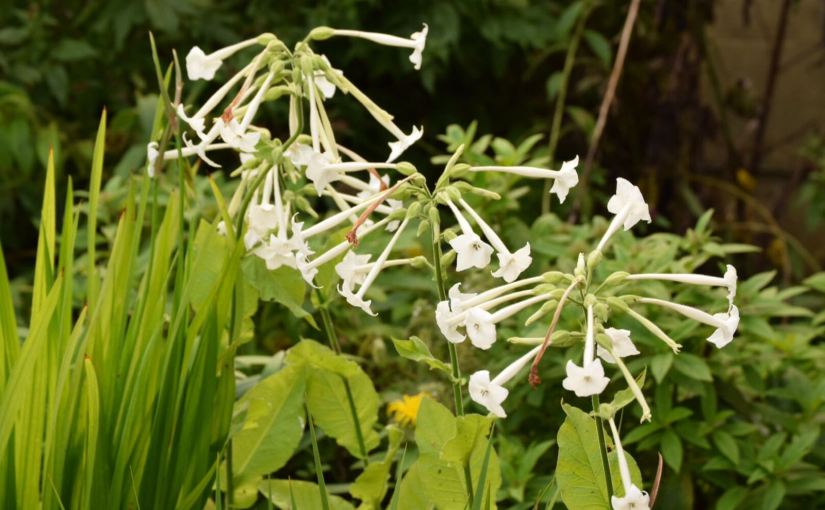
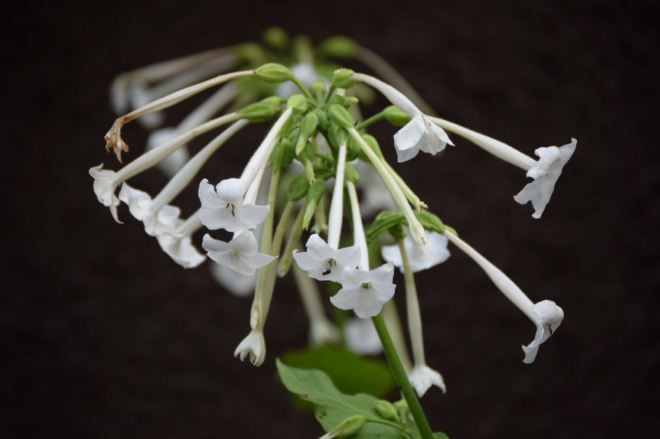
Nicotiana sylvestris

The white dramatic eye-catching flowers of Nicotiana sylvestris are an elegant addition to any garden flowering in late summer. It is also known as the tobacco plant. This plant can reach up to 6ft tall with large green leaves. Although many Nicotianas are perennial they are treated as half hardy annuals in the UK.  Sow in mid Spring inside or in a greenhouse. Plant out after the frosts. If sowing directly into the soil do so in May once the soil has warmed. Grow in moist but well drained soil in full sun to partial shade. Cut the flowers regularly to encourage extended blooming. They make great cut flowers and work well in a container or as a statement plant at the back of a border. The genus Nicotiana (Tobacco flower) has evolved over time to suit specific pollinators. Many light coloured flowers of the genus are pollinated by hawkmoths. The flowers are long and tubular with a strong scent.

img-20160927-wa0009

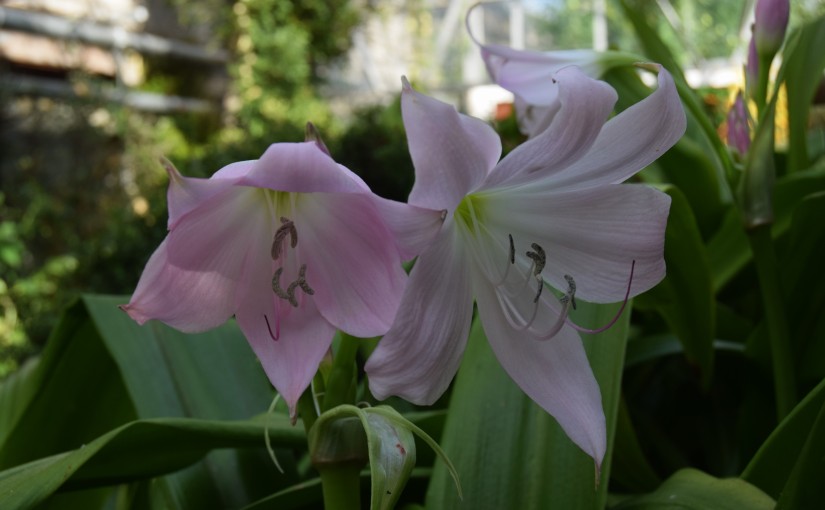
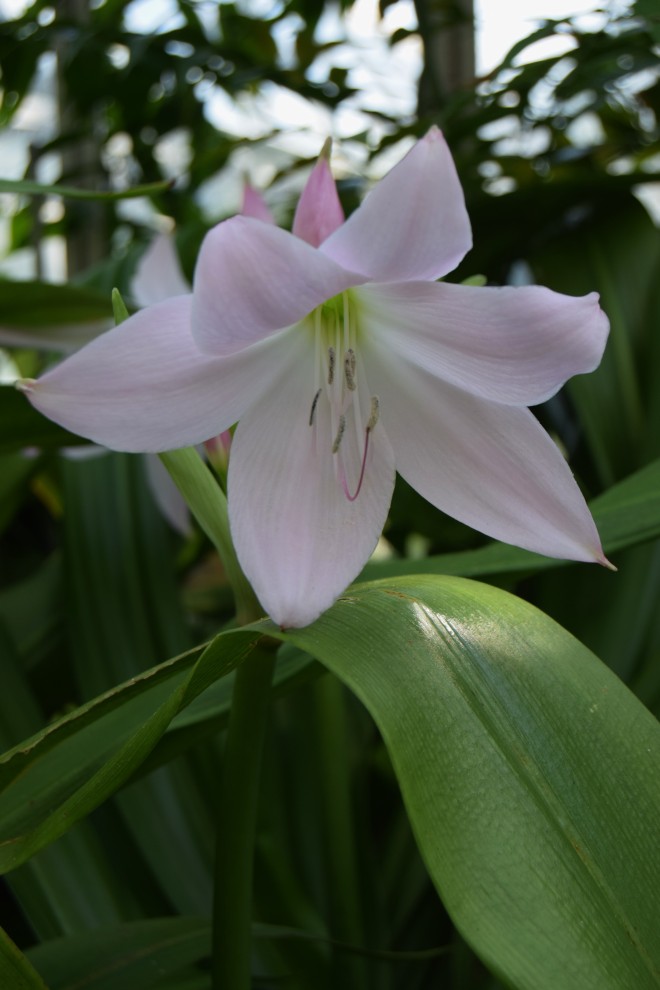
Crinum moorei

A bulbous clump forming plant that has green leaves that will reach 1 metre in height. This bulb is found in the Amaryllidaceae family and is commonly known as a ‘lily of  the Orinoco’ and originates from South Africa. They typically have a strong scent during the evening. The flowers are an elegant pale pink and look similar to Amaryllis flowers, blooming in late summer to early Autumn. They do best in moist but well drained soil that is fertile and humus rich in dappled shade. Otherwise the leaves will burn up in the sun. They are tender and will need protection from frost in colder regions. Always keep the neck of the bulb just proud of the soil. They can be propagated with fresh seed or from bubils in Spring. It was first described in the 19th Century by Sir Joseph Dalton Hooker,  then Director of Kew Gardens. It was named after the Director of Glasnevin Botanical Gardens in Dublin, a Dr Moore. The genus name is derived from Greek, ‘krinon’ meaning lily.


DSC_0210

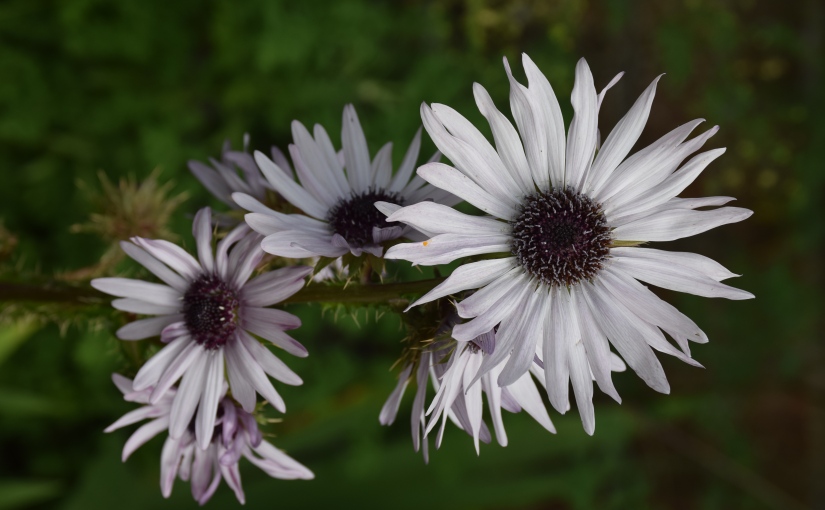
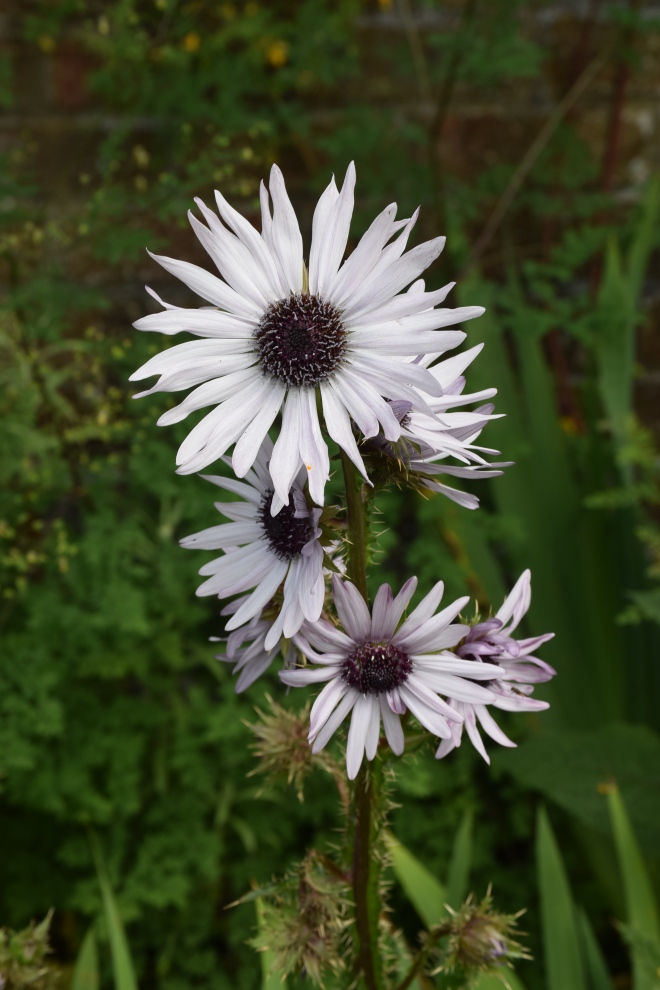
The Striking Purple Sunflower

Berkheya purpurea  was named after the Dutch botanist Jan le Francq van Berkhey (1729 -1812). Berkheya purpurea is the only purple flowered species within the genus. The majority within the genus are white or yellow. It is native to South Africa  where it grows in the mountains of the Eastern Cape, Drakensberg in Kwazulu – Natal, Lesotho and The Orange Free State. This plant is classed as a rhizomatous perennial which forms a dense prickly rosette of foliage. The single stemmed flower reaches about 1 metre in height and appears in UK cultivation between June and August. The flower is an attractive pale mauve with a darker purple centre. It was first cultivated in the UK at KEW in 1917 but only fairly recently has it become a popular garden ornamental. They grow best in soil that is fertile in full sun and well drained. It can be propagated by freshly collected seed or by dividing the root stock.


DSC_0721

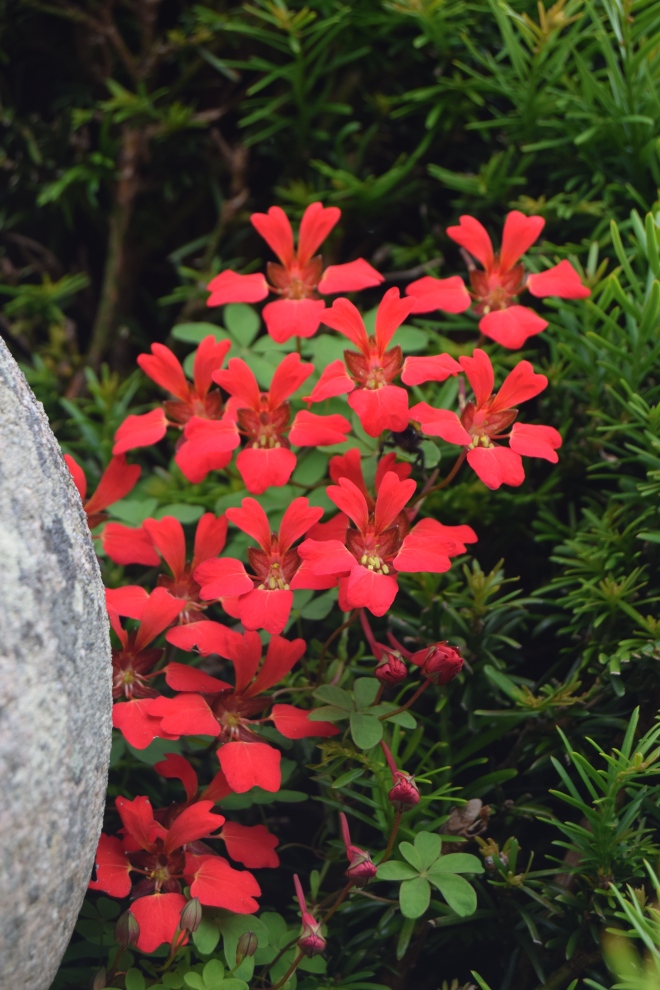
Flaming Red Nasturtium

This fiery red climber will make your garden look hot every summer. Tropaeolum speciosum grows perfectly against any fence, wall or hedge. Although it is classed as a Nasturtium it is only occasionally seen in a few gardens. The herbaceous climbing perennial will die down each year but will bounce back into life in spring followed by a burst of vibrant red flowers in summer. It originates from South America and typically looks best growing up an evergreen hedge such as yew.  At full height it will reach 3 metres. Experiment and try growing it through a Rhododendron or Holly. The key cultivation point to remember is that is a woodland plant. This means it likes shade and moist humus rich soil. In some particular situations it can handle some sun but for best bloom results it prefers cool conditions, After it has flowered bright purple fruits follow which maintains the interest through the season. It is fully hardy in the UK and was awarded a Garden Award of Merit by the Royal Horticultural Society in 1993. Propagation can be carried out by stratifying fresh seed or by division of the rhizome in early spring.


DSC_0551

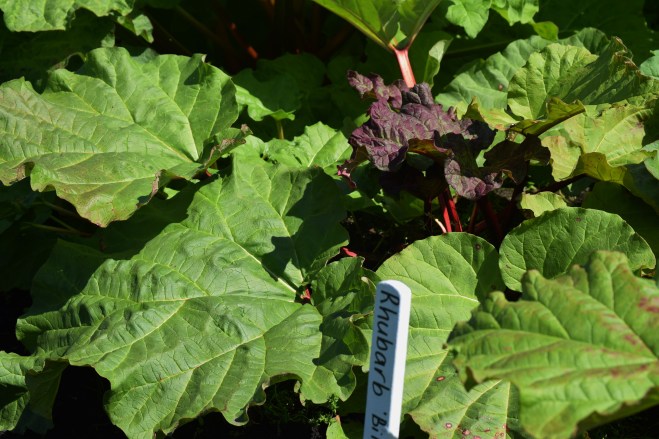
Growing Rhubarb

There is nothing better than eating a homegrown rhubarb crumble! Rhubarb is an edible and attractive hardy perennial. It has attractive pinkish red leaf stalks that once cooked are great in pies and puddings. It will grow well in a open site that is free draining and has fertile soil. Organic matter can be added to improve crop yields. It does not always come true from seed which is why division is the best method of propagation. This can be carried out from the autumn to spring. Plant rhubarb crowns 7cm apart and keep free from weeds with a good mulch. In Autumn cut back the leaves and expose them to a period of cold during the winter. Rhubarb can be forced in early Spring but make sure to always leave 4 stems on the plant after mid summer. This allows the plant to recover this uses its energy to produce new stems the next year. Force using a clay forcing pot which will give you extra sweet tender stems to harvest. Once established rhubarb can be harvested from late spring until the end of June.  After this it is not advised as the growth of the plant begins to slow down and will reserve its energy for next year’s yield.


DSC_0574


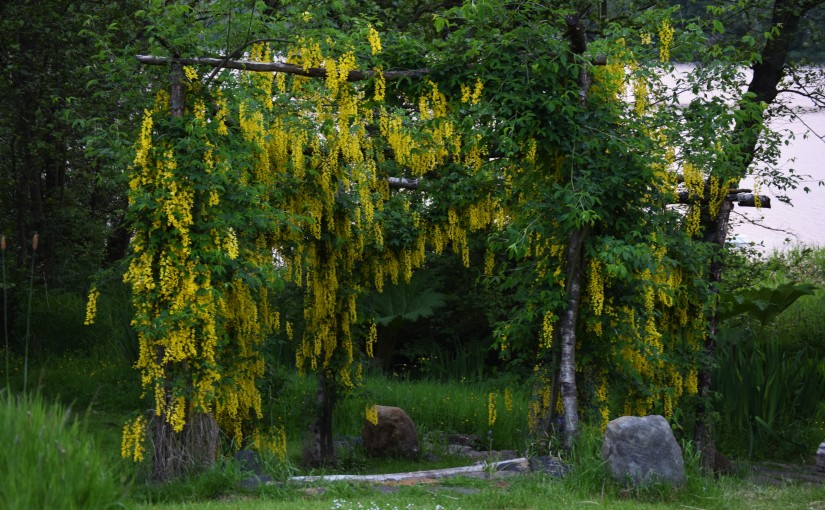
Laburnum Archway

Meandering through an archway of glowing yellow Laburnum flowers is a magical experience that you too can create in your own garden. This deciduous tree or small shrub puts on a wonderful show- stopping display each year during early summer. It has impressive pendulum flowers that are similar to that of Wisteria and are fragrant. It has commonly been referred to as the golden rain tree. It is a small genus that is found within the plant family Fabaceae and has trifoliate attractive foliage. However this  plant  produces shiny black poisonous seeds so take care when planting in areas with young children and pets. They make wonderful specimen trees or alternatively try the  horticultural technique of training  them over an archway or pergola to create an impressive display. It is best to select cultivars to suit your situation and some have been bred to have very long flowers. Once the main framework of your archway is created it will need little pruning. They are similar to Wisteria in that they only require spur pruning in early winter.  Be careful not to create large pruning wounds as they do not heal quickly and can as a result split the tree. They can cope with poor soil but do best in well drained and fertile soil.

The world famous Laburnum Arch at Bodnant Garden is well worth visiting.

DSC_0230 (2)

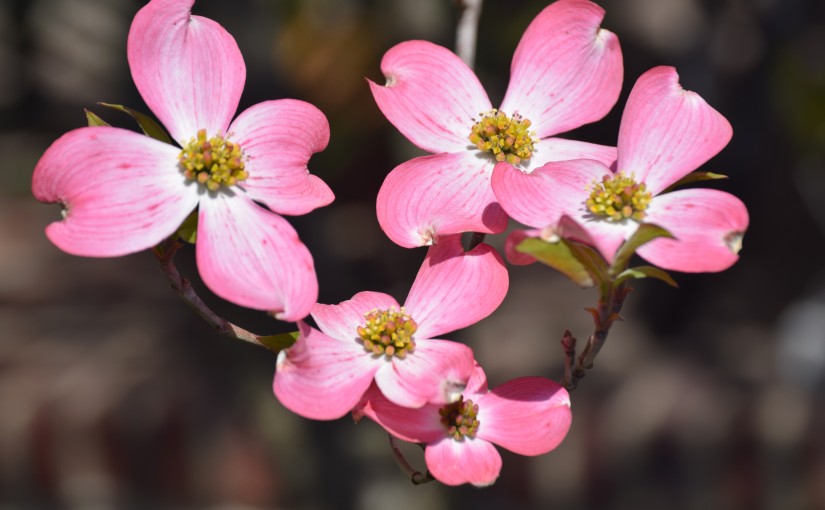
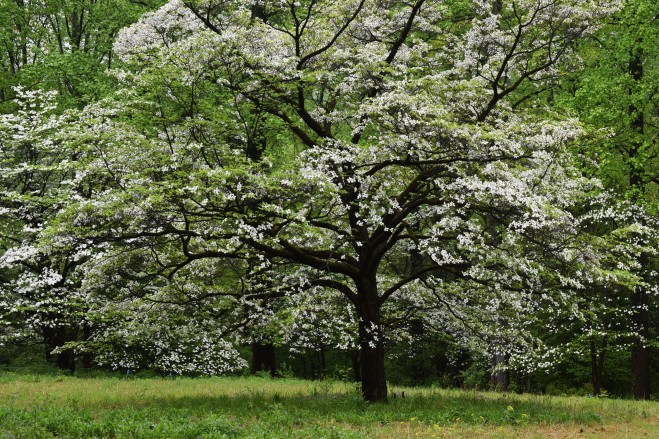
Exquisite Cornus

Dogwoods can be both beautiful shrubs or small flowering trees in your garden. There are around 60 species of Cornus with some grown for foliage like Cornus. kousa ‘Gold Star’. Others are grown for their winter stems or for attractive early summer blooms, many of these cascade down the elegant branches. Inside each flower are creamy bracts which are similar to a star in shape. There is a Cornus for every season in your own garden. Dogwoods grown for the colour of their stems provide excellent winter colour. Flowering dogwoods will put on a spectacular display in early summer ; C. florida, C.kousa, C.capitata and C.nuttalii do best in well drained but fertile soil that is rich in organic matter. All species of Cornus will tolerate full sun or partial shade. Winter shrubby forms do best in full sun. Some Cornus can suffer from Cornus anthracnose which is a fungal disease which affects the North American Cornus species. This infection can cause blotches and die back on the leaves but can be treated with a fungicide.


DSC_0229 (2)

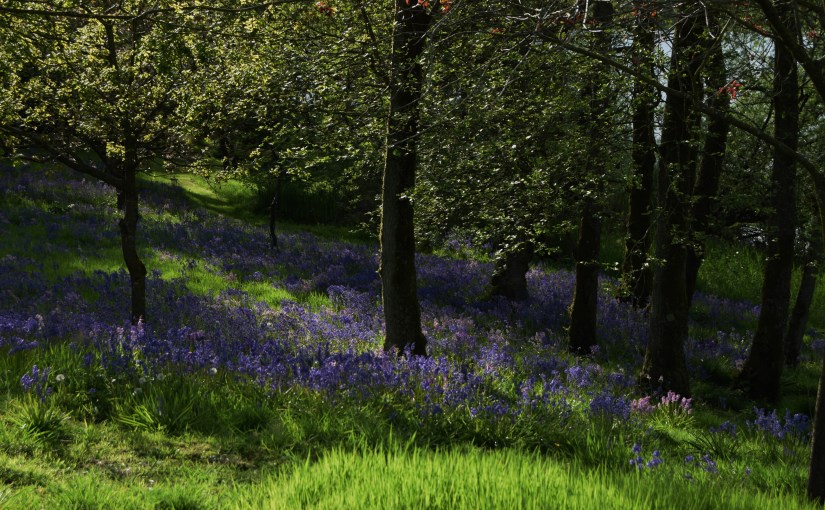
British Bluebells

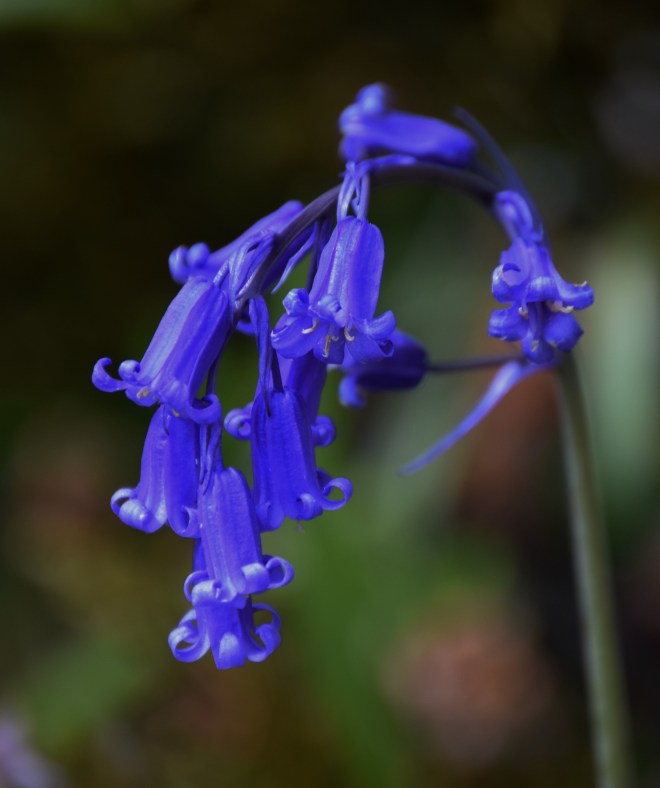
There is no more uplifting sight than a woodland floor covered with bluebells in Spring. Britain actually has three species of bluebells which grow across the country. Out of the three only one species is native to the country. Our only indigenous bluebell Hycainthoides non scripta is currently under threat. The threats are from hybrid crosses with both its Spanish cousin Hyacinthoides hispanica, commonly seen in gardens, and Hyacinthoides hispanica x non scripta. Gardeners are now being encouraged to avoid planting Spanish or hybrid plants in the countryside or close to a truly native bluebell population. Scientific research is currently being conducted to better understand the intermixing of genes between the species. Our bluebell could be threatened from various factors such as habitat loss, competition from non native species, unsustainable collection and climate change.


Check out Plantlife’s guide to help identify which bluebell species are growing in your garden.


DSC_0586 (2)