Irresistible Iris

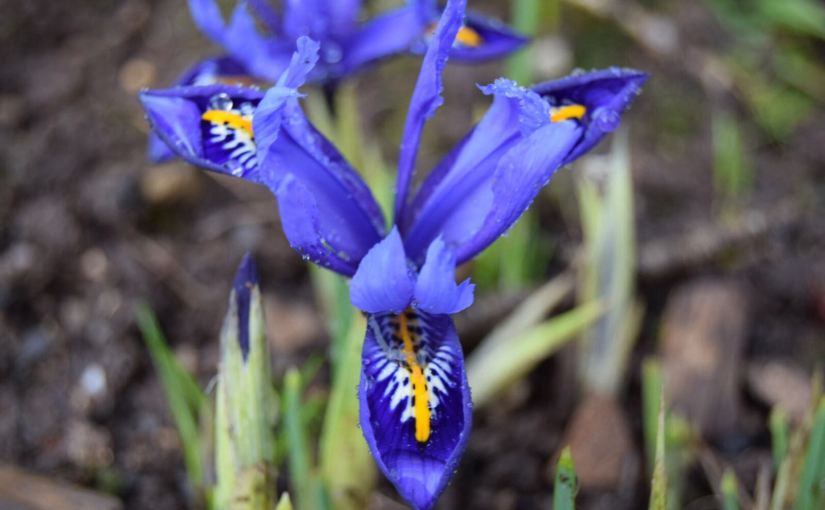
The striking dwarf Iris reticulata flowers in February. It kicks off the bulb season beautifully and brings the hope of spring to any garden.  These charming irises compete with snowdrops and crocuses as they all emerge around the same time. Originating from the Middle East they do best in well drained conditions where they experience a warm dry summer. The classic icy blue ‘Katharine Hodgkin’ was bred in 1955 by EB Anders, a former member of the RHS and joint Rock Garden Plant Committee.  Iris leaves are long and narrow with flowers in purple, white,blue and a hint of yellow variations of colour and they are typically fragrant. They work well in troughs, under trees and even indoors in a shallow bowl. Dress the bulbs once planted with a layer of grit to keep slugs and snails off. Plant in Autumn – twice the depth of the bulb. Alan MCMurtrie, a Canadian Iris breeder, was fascinated by the bulb after a trip to Switzerland in 1979. He has achieved an outstanding job of breeding them and dedicated 30 years of his life doing so. It is thanks to Alan we now have breathtaking colours and patterns never seen before.

Some notable new hybrids to try are:

Iris ‘Velvet Smile’

Iris ‘Starlight’

Iris ‘Regal’

Iris ‘Storm’

Iris ‘Sea Green’

Iris ‘Spot On’


Alan McMurtrie (Breeder)


Scottish Rock Garden Club


Terrariums are on Trend

One of the  latest trends in horticulture are terrariums where you can create and assemble a miniature plant world to admire in your own home. A terrarium is a small glass case that allows you to grow plants with little effort or specialist skills. They act as a unique living space between indoors and outdoors. This is not a new concept as in  1800 Nathaniel Bagshaw Ward discovered he could grow a plant in a sealed glass bottle which would provide enough carbon dioxide and oxygen, plus moisture for it to survive. After this the Wardian case, a sealed portable mini greenhouse, was invented by Sir William Hooker. The Wardian case was used by many plant hunters to bring back live specimens of plants from far away places. They would arrive in perfect condition after being at sea for months. Terrariums act in the same way like mini greenhouses which can be decorated with coloured pebbles, moss, lichen and pine cones. When designing your terrarium select small plants and nestle them into a mix of soil and light grit for drainage. If the terrarium is sealed select plants which prefer high humidity such as orchids, ferns and venus fly traps and create a mini greenhouse. If the terrarium is not sealed you can select drier plant species such as cacti and succulents. Let your imagination run wild and create a miniature plant landscape for your home.


Edgeworthia chrysantha

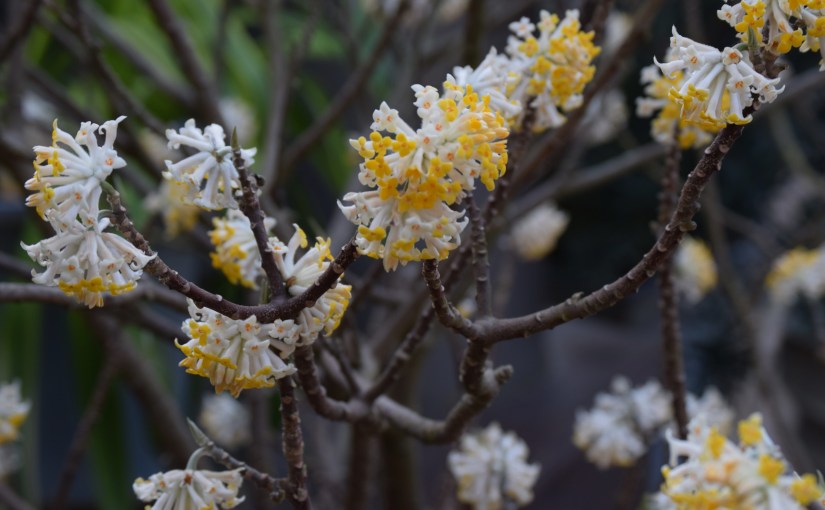
This elegant shrub provides superb interest and fragrance during the long winter months. Edgeworthia chrysantha, also referred to as the paperbush,starts to bloom in December when there is little interest in the garden. This genus is related to the Daphne, another sweetly fragrant winter flowering shrub. People describe the smell of Edgeworthia as similar to that of Gardenia. It is typically a 5ft by 5ft deciduous shrub with papery bark. In Japan they are known for using the bark to make high quality paper. It can be tricky to grow at times but is definitely worth the challenge ideally requiring good humus rich soil in a sheltered spot. If you can provide this it will thrive and it has been known to do well in gardens, even in severe winter frosts, if slightly protected. The shrub has been known to do well in a cool greenhouse in a pot but just remember to feed it regularly. It can be propagated by seed or semi ripe cuttings during the summer months. It looks good planted in combination with snowdrops, crocuses or early flowering hellebores.


DSC_0383 (2)


The Welcome Sight of Snowdrops

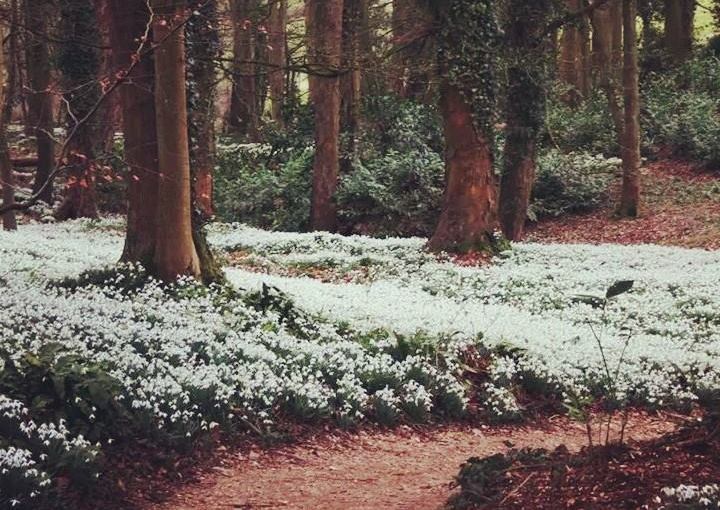
Snowdrops are always greatly anticipated as they are the first flowers of the year after a long  cold winter. Their graceful nodding white flowers carpet the landscape and look wonderful in any garden setting. They have carefully adapted to pierce through winter snow. Snowdrops originate from Europe and Western Asia and belong in theAmarylliaceae plant family. This small bulb is found in the genus Galanthus which in Latin or Greek translates to‘milk flower’. The flowers are so adored that they have a big following of enthusiasts called Galanthophiles who will pay large sums of money for just a few bulbs to add to their collection. Most Galanthophiles look for new snowdrops in graveyards or old gardens where they may have naturally hybridised. Other enthusiasts have set up breeding programmes to create new variations that do not exist.  You may not have given snowdrops en masse much thought before, but look closely and you will see they have different distinctive features from flower markings, size and stem colour. Today there are hundreds of varieties available to grow. They can be propagated by seed easily but the most effective method of propagation is by division. Once the foliage and flowers begin to die back divide large clumps ‘in the green’ and distribute them around your garden. They can even be planted under trees and do best in humus rich soil that is well drained but doesn’t dry out in summer.  They come up early in the year and are a welcome sight to see. Many public gardens have large displays and organise snowdrop festivals to attend.

Snowdrop Festival Scotland

http://www.visitscotland.com/blog/scotland/snowdrop-festival

Painswick Rococo Garden

http://www.rococogarden.org.uk/SeasonalJoys/Snowdrops.aspx

Cambo Country House and Estate

http://www.cambosnowdrops.com

Colesburne Park

http://www.colesbournegardens.org.uk/the-garden/snowdrops.html


Flower Forest Barbados

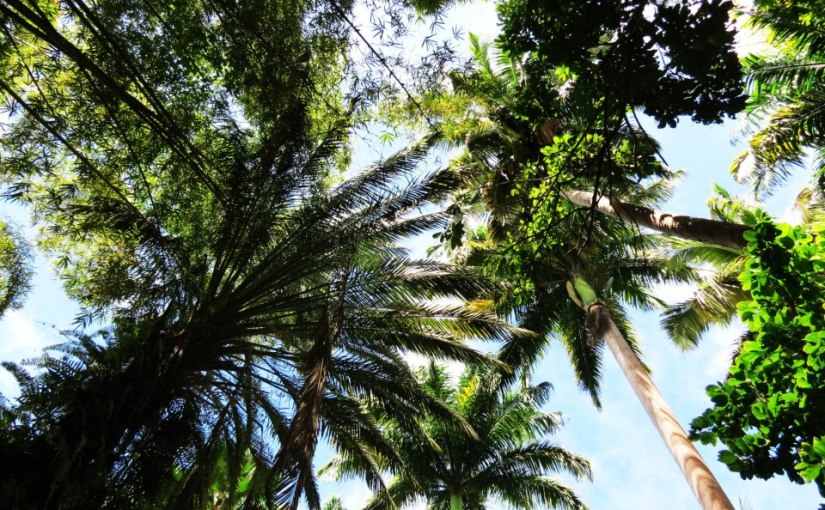
Enter the Scotland district of the island and you will find the tranquil flower forest. This beautiful garden has a half mile path that winds through the 53.6 acres of grounds. The garden has some breathtaking scenery looking out towards the rugged east coast of the idyllic island. It is an oasis of calm with the odd monkey crossing the path and the call of tropical Caribbean birds. The land and property was once a sugar plantation but today it is home to more than a hundred different varieties of tropical flora. You will see vibrant heliconia, ginger lilies, hibiscus and palms. Located 750ft above sea level the garden has been established since 1985 and is a real hidden gem in the countryside. The best time of year to visit for flowers is during the dry winter season from January to March. Barbados was once a useful holding station for Kew Gardens and other important plant hunters of the world during this era. After a period of quarantine on the island the plants were shipped to Great Britain. This is how plants from around the world reached the UK.

http://www.flowerforestbarbados.com


Witch Hazel

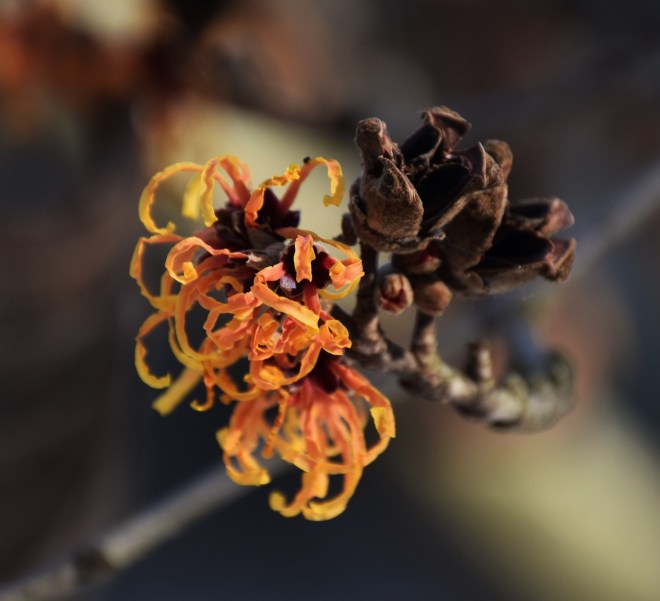
Against winter’s bleak grey backdrop witch hazel is a welcome site in any garden. Witch hazel belongs in the genus Hamamelis and originate from North America, Asia, Japan and China. These stars of the show bloom when everything else is dull and dormant. They come in a range of dazzling colours from red and orange to bright sulphur yellow. Some varieties of this hardy shrub are fragrant and sweet in the cold winter air. Cut a few short stems and place in a vase to scent your home. The leaves typically turn red and yellow in the fall and are green during the growing season. The vast majority of Hamamelis are slow growing but will eventually reach around 3.5metres. If you need to prune only do so lightly being careful not to remove too much material. The ideal growing conditions are in a humus rich soil in full sun or partial shade. Try to incorporate organic matter withwell-rotted manure or compost into your soil. When locating them in your garden try grouping them in a sheltered position near a door or wall to contain the sweet fragrance. Native American Indians used the inner bark of the stem to ease bleeding and people today still use the oil to reduce bruising.  They will bring a smile to your face on the coldest and dullest winter day and you will know that Spring is not far away.


DSC_0356 (2)


Gardens by the Bay, Singapore

Step away from Singapore’s urban hustle and bustle into an oasis of beautiful gardens to enjoy and explore the Gardens by the Bay. Singapore’s newest open greenspace is owned by the National Parks Board of Singapore and was steered by CEO Tan Wee Kia. He helped create the vision from the beginning stages to completion. It represents the greening projects that have been taking place across the city since 1963. The project epitomizes the city’s links between environmental advances, history, heritage, recreation and tourism. In the early 2000s the Singapore government allocated 101 hectares of reclaimed land down by the waterfront. In January 2006 an international design competition was launched to find a world class designer for Gardens by the Bay. This was followed by an 11 member jury comprising of local and international experts. Two winners were shortlisted and put on display at the Singapore Botanic Gardens as an interactive exhibition which allowed 10,000 people to visit and give valuable feedback. It opened to the eager public in 2011 showcasing high standards of horticulture, technology and innovation. It cost S$1 billion to construct with an annual operation cost of S$50 million. The expanse of greenery is free to explore. Within this area are biospheres which replicate a dry, mild climate in one and a tropical cloud forest in the other. These help to produce and display plant habitats and environments that do not climatically occur in Singapore. The inspiring flower dome showcases the largest glasshouse in the world with spectacular changing floral displays. Inside this flower dome stands the African Baobab tree which weighs more than 32 tonnes and is the largest on display. This unique tree is pollinated by fruit bats with the dispersal of seeds by terrestrial animals such as elephants and baboons by digestive tract which is needed for germination to occur. Inside another biosphere named the cloud forest is a 35 metre tall mountain covered in vegetation that showcases the world’s tallest indoor waterfall. Here plant species from 2,000 metres above sea level are displayed to convey the unique biodiversity, geology and ecological aspects of cloud forests. It also highlights the global threats that face the nine zones of the conservatory. This is a people’s garden and acts as an education tool as well as a recreational green oasis in a vibrant city.


Beautiful Borage

We are currently experiencing a gin renaissance. In the past few years we have seen new and exciting botanical gins on the market. New gin bars popping up everywhere and weird and wonderful botanicals being drunk. Many are now infused in the style of cocktails. New gins are now boasting 20 odd botanicals with a traditional juniper base. These floral layers are adding to the taste and enjoyment of the beverage. Plan ahead for this summer and grow Borage flowers in your garden. This really easy to grow annual can be started from seed in the spring. The dazzling blue flower is edible and it holds its colour well. The flowers can float in your gin or Pimms glass. Or even try freezing the flowers which will give you an elegant ice cube. The flowers can also be added to salads or cakes as a floral garnish. If blue isn’t for you there are some seed suppliers where you can select pink or white flowers. Grab your trowel and get planting!


Greening our Urban Landscapes – combating climate change with technology and natural planting

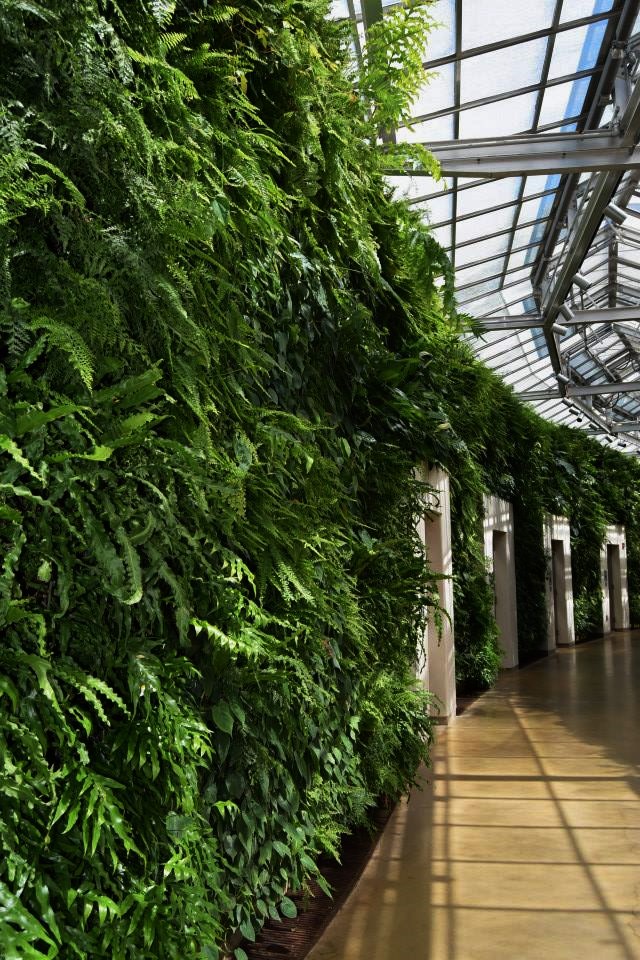
A new wave of nature conservation is emerging through designing sustainable and environmentally tuned landscapes. There is a drive to move away from formal high maintenance landscapes to naturalistic ones that are diverse and low maintenance. Today horticulturists and landscape designers are working together to redefine urban spaces to encourage nature in cities. Ideas can be developed for car parks, skyscrapers, roof tops, road verges and suburban gardens. Even though this land has been occupied by man over centuries the space can be redeveloped as an important place for nature to thrive. The loss of natural habitat around the world due to urbanisation and population growth is startling. It is for this very reason that landscape architects, garden designers and horticulturists must look at our cities with fresh eyes. Plantings need to have purpose in a time with unpredictable changes like flooding and drought due to climate change. It is more important than ever to plan for the future harnessing new technology and natural planting. Why can’t we have a meadow growing on skyscraper rooftops, wetland areas that purify clean drinking water, rain gardens and ecologically designed green walls and streets? We need to move forward in the right step to let nature thrive in every fragment of our landscape.


DSC_0676 (2)

11892001_10153162893503546_975871356988016877_n (2)