Thriving on Air

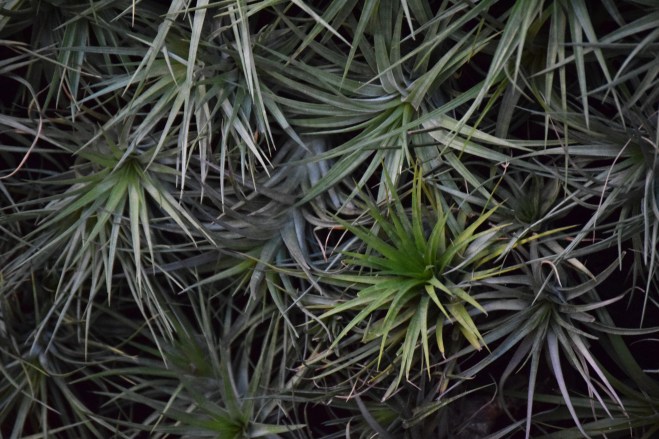
Air plants come in an incredible range of colours, textures and sizes. These unique plants make their home suspended in the air on a tree or areas of rocky outcrop.  One of them is Tillandsia usneoides, more commonly known as Spanish moss, which is native to the Americas and drapes from trees in the Southern United States. It hangs like a living curtain and these unusual plants have no roots and get their nutrients plus water from the air which is absorbed from the atmosphere. They are typically slivery green in colours and some particular forms will even produce flowers that range from pink, purple, yellow and red. Air plants are very low in maintenance and can cope with extreme climatic conditions. Since they have no roots these plants can be used as design elements as they can be moved around easily or attached to walls. Run them under water or gently mist them – these are the perfect houseplant if you are prone to killing your indoor specimens.
 

DSC_0421 (2)

Winter Colour

Winter’s cold palette can even curb the interest of the most enthusiastic gardener. Colour is a very important element of any garden as it creates the scene that awakens the senses of the visitor. Winter doesn’t have to be depressing. Work with that palette to create subtle tones, highlights and contrasts of colour. Once the trees and shrubs have lost their deciduous leaves their skeleton branches become the backdrop of the garden. The gardener must work creatively to use striking flaming red and golds against the paler winter hues. Flashes of carefully placed plants will provide surprise, shock and joy. Brightly coloured berries look magnificent against evergreens like yew and holly. Allow the winter sunlight to filter through the branches onto the white trunks of birch trees as this will add atmosphere to any garden in winter. Each season nature presents a different array of colours that we must work to enhance and create the desired landscape we are drawn to even on the dullest winter day.

12096594_10153254487558546_4116064074216577391_n

Black Orchid

True black plants do not typically exist in nature, but some of the most unbelievable shades of darkest purple plants have been bred by man. They are beautiful and enchanting to view. This winter at Longwood Gardens in the Cattelya display case there is a special black orchid which is causing a sensation. The orchid is called Fredclarkeara After Dark ‘SVO Black Pearl’ after Fred Clarke the man who hybridized it.  This plant breeder owns Sunset Valley Orchids in California which specialises in growing superior hybrid orchids. The plant belongs in the group of orchids called Catasetum which means it loses its leaves during the winter season. In some species of the Catasetum, the differences between male and female flowers are so striking that early taxonomists mistook female forms for different species. Flowers in this species are produced from near the base of the maturing pseudobulb. These orchids are originally native to hot humid tropical areas and grow during the rainy summer months.  This period of dormancy during winter is when the black orchid flowers for around 6-8 weeks. During this period it will receive very little water and it has no active growth until later in the year. Until fairly recently this has been the only truly black orchid in the world.

Screenshot_2016-01-03-17-14-34_1

Vizcaya Gardens, Miami

Vizcaya House and gardens stand as an oasis in Miami, away from the hustle and bustle of the city in Southern Florida. The name ‘Vizcaya’ traces back to a northern province in Spain which highlights the strong influence of European inspiration. This beautiful villa and estate was the winter home of the International Harvester Vice President, James Deering, and created between 1914 and 1916 to look like it had stood there for centuries.  Originally covering 180 acres including farm land Deering wanted his house to be designed in the style of the Italian Renaissance and French Baroque villas. The gardens were designed by Diego Suarez, a Colombian designer who trained in Florence and are one of the best examples in the USA of Italian garden design. They were adapted and manipulated to look Italian in design and form but planted using Miami’s subtropical plant species. Due to the garden’s location on Biscayne Bay, it is susceptible to high winds and storm surges during the hurricane season and mangroves surround the property offering protection. Inside the plants have been chosen to cope with salt spray, high humidity and wind damage. Limestone elements are used throughout the garden to create an aged feel which complements the planting design. Bromeliads spill out of stone urns and give a subtropical feel. Throughout the garden Italian influences from statuary, and water features are present that cascade and flow. In many areas plants have been clipped and trained neatly to resemble a formal presence next to the house. The orchidarium has recently been restored to its former 1917 design and showcases a beautiful display of seasonal flowering orchids. Visitors who arrived from the bay must have felt they were arriving in Venice and enjoyed taking tea in the teahouses in the warm winter subtropical climate.


How to make a Christmas wreath

There is nothing better than foraging in your garden for winter foliage, berries and pine cones to decorate your special holiday wreath. Some spices such as cinnamon, star anise and dried oranges can even be added to your wreath. Use the foliage such as the evergreen material to pad out the wreath frame – put the same amount all the way around. Make sure it is even all the way round and not too heavy to hang on your door. Use florist wire to attach the plant material, berries and cones and allow your creativity to flow by decorating as you wish. Try using plant material like holly, pines and evergreen Magnolia that will last and still look good throughout the whole holiday season. Attach pine cones using wire pins and remember to attach wire or strong string that will allow you to hang carefully on your door. Now all you need to do is add a length of brightly coloured ribbon and attach using a loop of wire.


12342510_10153329099343546_7856252395819845255_n

Pretty Narcissus Paperwhites

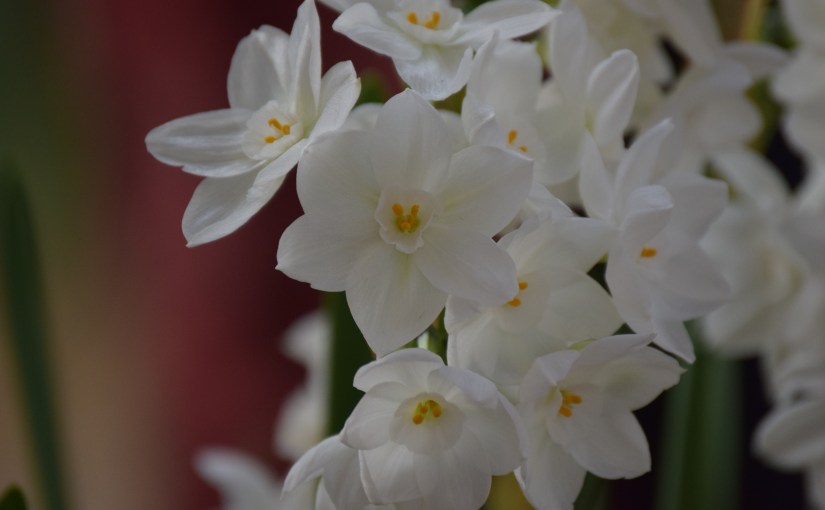
This fabulous indoor bulb will fill your house with a wonderful scent during the holiday season. Paperwhites are quick to flower and only take 4-6 weeks in a frost free greenhouse or a cool room in your house. They make the perfect table centrepiece during the festive season. Make sure the pot has holes for drainage and use branches and string to support the flower stems from flopping over. It is best to use free draining compost with grit as this is the ideal mix. The top of the pot can be dressed with horticultural grit or sphagnum moss. Good varieties to try are Avalanche, Silver Chimes and Erlicheer. Place them around your home and allow their elegance to add to the holiday experience!


12311311_10153332103503546_6508402466834651853_n


Singapore Botanic Gardens

This historically globally renowned botanic garden became a UNESCO World heritage Site in 2015. It is the first tropical botanic garden to be awarded this prestigious award. Sir Stamford Raffles established the garden in 1822 at Fort Canning. In 1859 the present gardens were founded and laid out by the Agri Horticultural Society. In 1974 the gardens were handed to the British colonial government. Following on from this the gardens grew and developed with the great assistance of a few Kew trained botanists. Today the beautiful Gardens are owned and managed by the National Parks Board.  SBG has been instrumental in the greening and transformation of Singapore into a garden city. The garden consists of 183 acres and has a visitor pull of 4.4 million people a year. It is very famous for its orchid collection which has more than 450 species. In the 1920s, it spearheaded new techniques in raising orchids in aseptic media and founded a regional orchid breeding industry.  It is also a regional centre for plant science, research and conservation in South East Asia. It is well worth a visit and was named Asia’s top park by TripAdvisor in 2013.


DSC_0746 (1)


DSC_0622

Create a succulent fountain

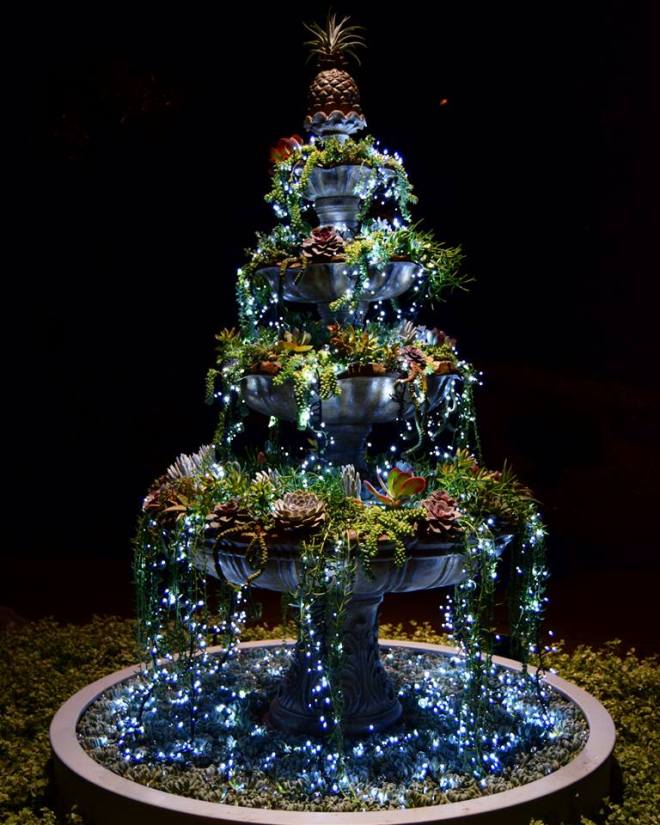
If you have a dry fountain why not create an attractive display of succulents in your garden. Use cascading, rosette and clump forming varieties. Simply add some compost if the growing depth is shallow this is ok as succulents tend to have shallow root systems. Ensure there are holes for the water to drain easily. As each tier is smaller than the one beneath work on arranging your plants with small rosettes at the top of the fountain and work your way down. Try to pick contrasting form and colours of succulents for visual appeal. The best part of this design feature is you can use trailing succulents placed over the edge to mimic cascading water. Why not illuminate with evening lighting to extend your enjoyment of this lovely garden feature.


12274503_10153317810668546_7071269647573273442_n


Winterberry for wow factor in the winter garden

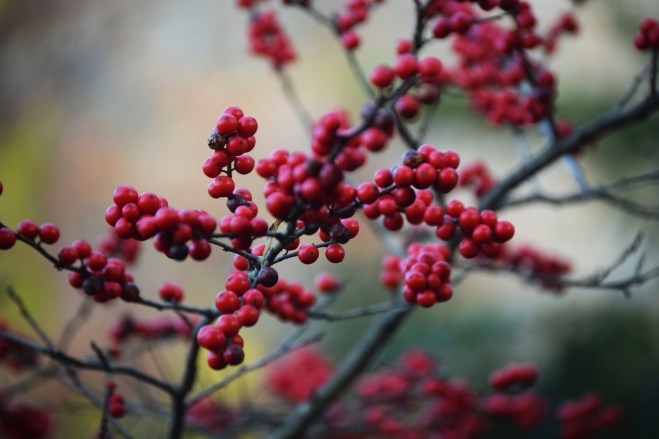
Ilex verticillata, commonly known as winterberry, is a beautifully exquisite holly  which will brighten any garden during a dull winter day. Deciduous and native to Eastern North America where it is found thriving in swamps, damp thickets, low woodland and along streams. It can be slow growing with an upright habit that typically gets to a height of 3.5 metres tall. The flowers may be insignificant and small but attract many beneficial pollinators. Hollies are dioecious with male and female plants on separate plants. One male can pollinate 5-10 females. For this reason make sure you plant a good male to female ratio to ensure excellent berry displays in winter and snow conditions. There are now numerous cultivars available on the market. They will brighten any winter garden so grab your spade and get planting!


DSC_0064 (2)