Darwin’s Orchid

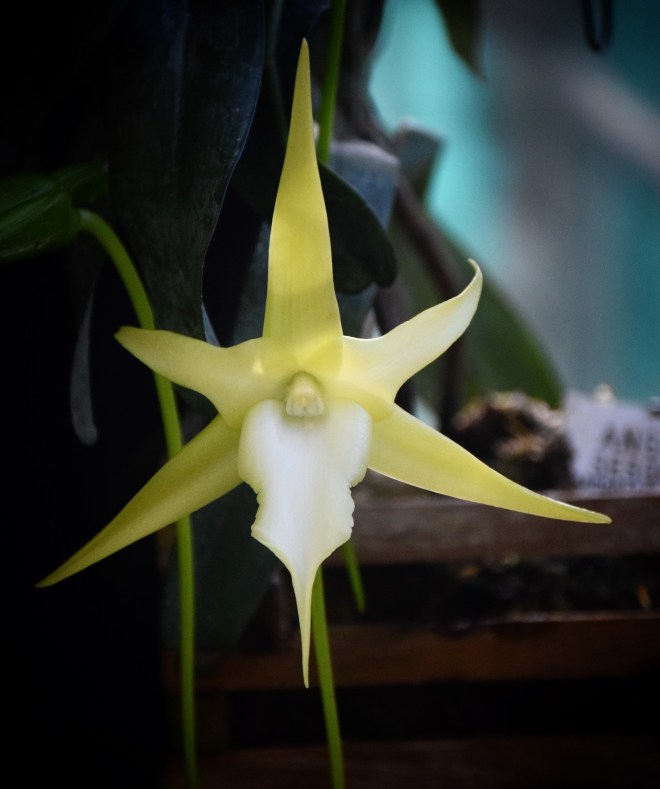
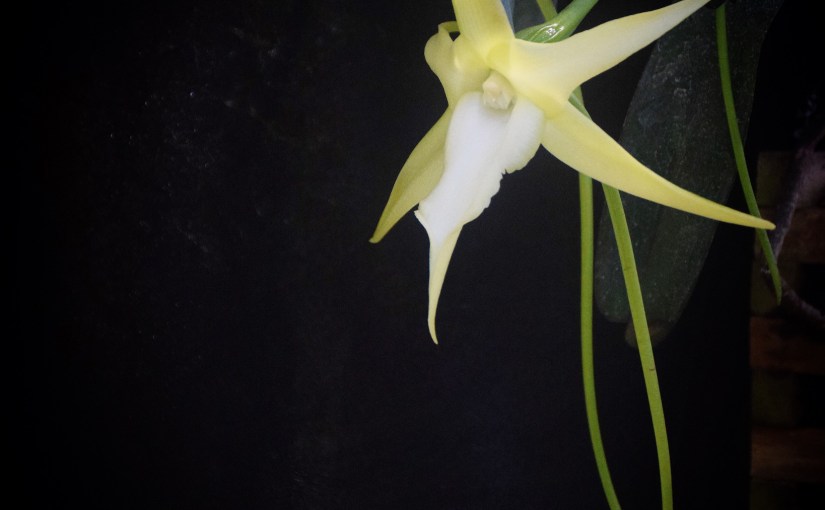
This striking orchid is known not only for its beauty but for its story. The remarkable design looks less like a flower than some kind of engineering construction. Angraecum sesquipedale – the flower was discovered in eastern Madagascar by the French botanist Louis-Marie Aubert du Petit-Thouars, is also known widey as Darwin’s orchid.

The genus name, Angraecum, is derived from the Malayan word anggrek, which is used to describe several species of epiphytic orchids. The specific epithet sesquipedale comes from the Latin sesquipedalis, meaning ‘one and a half feet’, in reference to the long flower spur.

This orchid is widely known and admired for its association with Charles Darwin who was sent a specimen in 1862. He predicted it would be pollinated by a moth with a proboscis 20 – 30 cm long. The moth was discovered in Madagascar by Rothschild and Jordan in 1903 and named as Xanthopan morgani praedicta, seventeen years after his death. As predicted both spur and proboscis are long.  Darwin was fascinated with how orchids, the world’s largest plant family with nearly 30,000 species, are pollinated by insects, because they had co evolved in many different ways with their pollinators.


k

image001

Golden Snowdrops

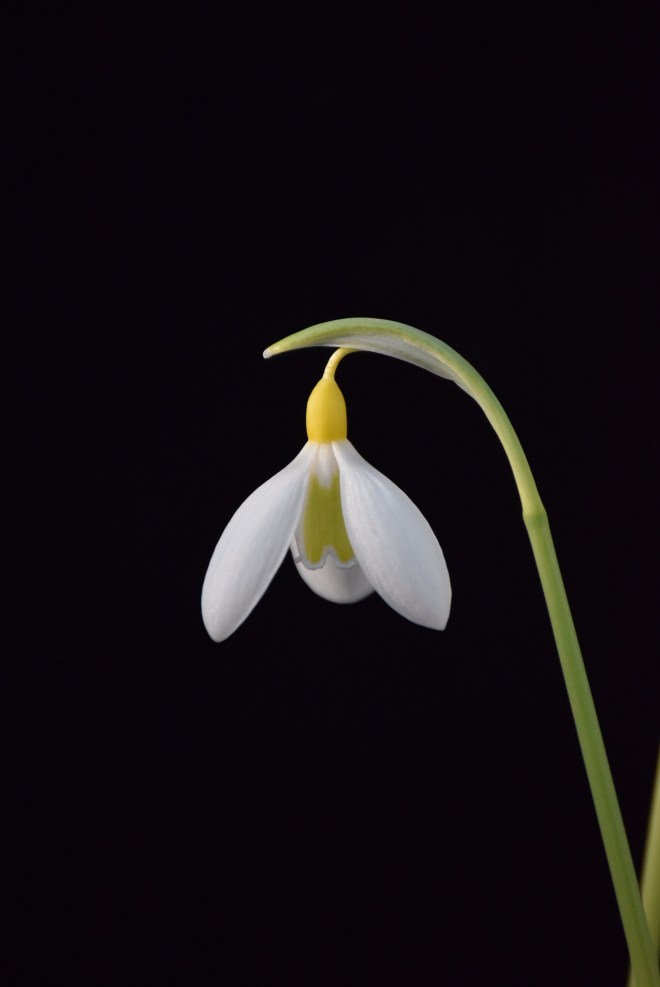
Yellow snowdrops have been growing wild in Northumberland for centuries. A study carried out by John Richards, Professor in Botany at the University of Newcastle found that only 1% of snowdrops in Northumberland were yellow. Meaning the yellow colour was not spread evenly over a native colony. It was found that colonies had snowdrops that were neither yellow nor green, but instead a sort of inbetween colour. These were named ‘halfers’. You might ask what caused the yellow colouring? It became apparent that when the yellow snowdrops and halfers appear in spring they contain just one third of the amount of chlorophyll A and almost no chlorophyll B compared to the common green snowdrop. Despite this, once they have flowered the chlorophyll levels are found to be the same as the regular greens. This disproves the common assumption that yellow snowdrops are weaker than the green forms. The reason why the yellow flowers occur is still not fully understood. Professor Richards suggested that it might be that yellow snowdrops particularly thrive in high light intensity. Spring arrives later in Northumberland meaning the light intensity is high by the time the snowdrops emerge.  Yellow snowdrops have also been found to grow particularly well on the east coast of Scotland even though they do arise from there originally. Recently there has been an increase in the number of yellow snowdrops that gleam in the spring golden sunshine.  In recent years an expensive yellow snowdrop sold on eBay was named ‘Golden Fleece’. One eager buyer paid £1,390 for one bulb in 2015!! However it took 10 years to breed and another eight to multiply up before bulbs were available for sale. Hopefully as we look towards the future we will see more golden snowdrops available for our gardens.

DSC_0186


DSC_0175

Protecting the coastline

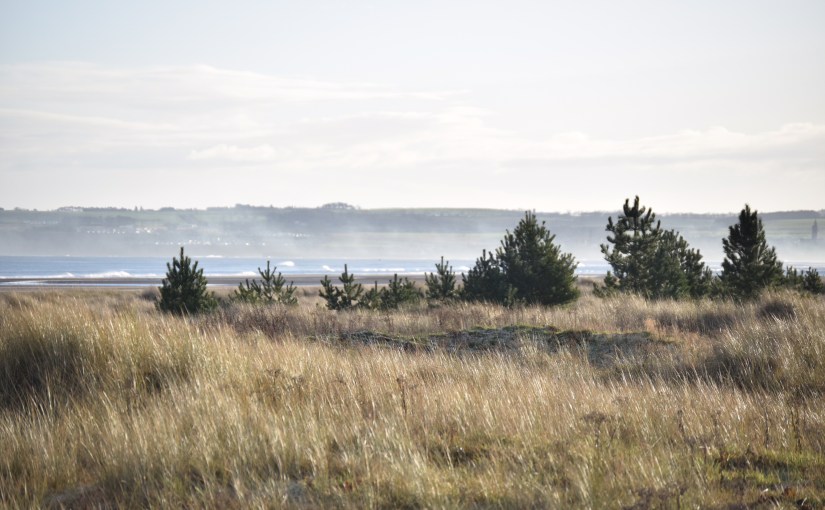
Plants are central to the formation, growth and character of sand dunes. Plants that have adapted to salty coastal conditions are known as halophytes.
Coastal sand dunes form where a beach is large enough to allow the sand to dry out and where winds can blow the sand landward. Here the sand is then trapped by dune grasses which grow through layers of sand. Within the sand dunes there is little organic matter meaning few nutrients available for the plant species that grow there. In some cases plants have adapted to store nitrogen in their root structure. Sand dune vegetation varies widely and it can depend greatly on when the sand is deposited. One of the first plants to colonise a sand dune system is usually Marram grass (Ammophila arenaria). This incredible grass has a deep root system which allows it to cope when sand is deposited on top of it. Over time other plant species begin to colonise the dunes and help improve  the sandy soil structure. Today many sand dunes are threatened from coastal erosion, climate change, residential development and invasive species. This highlights how important is is to protect and conserve these valuable ecosystems that support important plant and animal life.
DSC_0106

Spooky  – Decaisnea fargesii

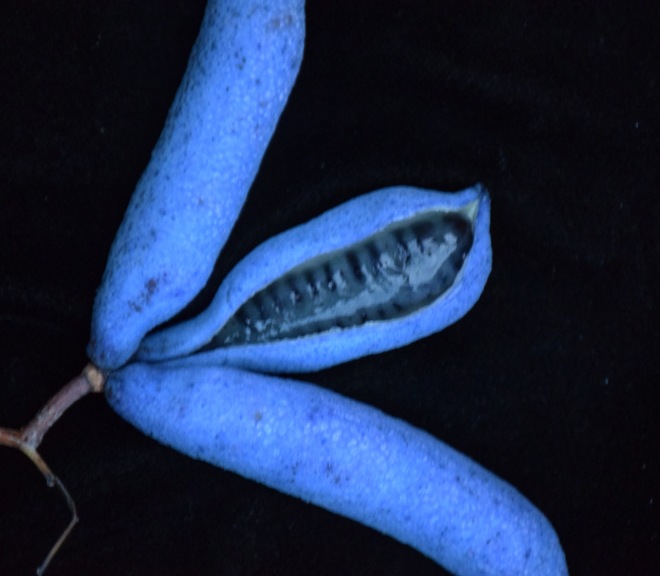
The freaky dark fruits of Dead Man’s fingers will certainly be a talking point for your garden. This creepy looking plant is scientifically known as Decaisnea fargesii. It originates from Chinese and Nepalese woodlands and scrub between 500 m and 2500 m elevation. The eerily skin like feel of the bright blue seedpods give the plants its common name. Inside each seedpod is a translucent jelly pulp. Within this jelly pulp are flat dark black seeds. Although the seeds are not edible the pulp jelly part is edible. Those who have managed to taste this weird looking jelly say its tastes refreshing and similar to a cucumber or melon. The plant is found in the chocolate vine family Lardizalaceae and as it is frost hardy it can be grown in the UK as a garden ornamental shrub. Why not try growing this shrub in your garden and see if you can spook your visitors around Halloween time.


IMG_2720


IMG_2721 (1)

Mauritius Botanic Garden

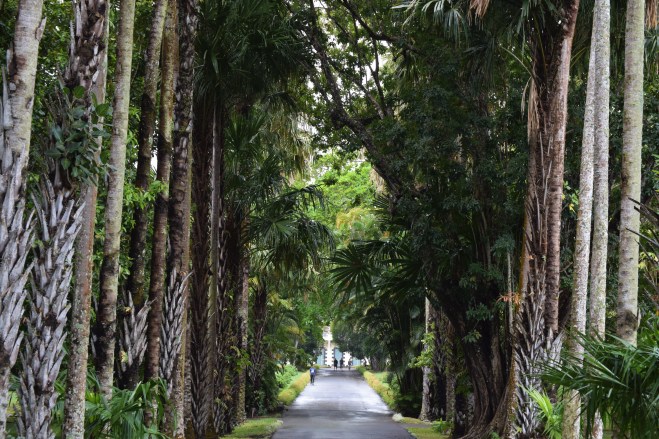
The Mauritius Botanic Garden covers an area of 33 hectares. The core mission is conservation, education, recreation, culture and history, and it is known worldwide as one of the oldest botanic gardens in the southern hemisphere.

It dates back to the French period on the island. In 1736, the French governor, Mahé de Labourdonnais, chose to set up his domain around the present Main Gate at Pamplemousses. In 1767 of the French Intendent, Pierre Poivre introduced vegetables, fruits and flowers from all over the world. Amongst these plants were some of the most prized species of the time: namely nutmegs Myristica fragrans and cloves Syzygium aromaticum from the Malaccas. These species are still present in the Spice Corner of the Garden.

After Poivre’s departure, the garden was administered by Nicolas Céré (1775 – 1810). He planned many of the main avenues and had several ponds built, notably the Giant Water Lily Pond, now filled with spectacular Victoria amazonica. After the French period, the garden faced difficulties during the first thirty years of British rule over the island. Thankfully the garden was revived with the arrival of James Duncan as Director in 1849. A large collection of palms was introduced then including the majestic Royal Palm Roystonea regia. The Talipot palm Corypha umbraculifera is known to grow for 20- 80 years and is featured in an avenue. At some point in its lifetime the palm will mature. During this point the palm will produce the largest and most spectacular flower in the plant world. It produces as many as 200,000 flowers which in turn will set several thousand single seeded fruits in about a year. Within the gardens you can also see a variety of wildlife and even giant tortoises!

The garden was first known as the Royal Botanic Gardens, Pamplemousses. However it was renamed on the 18th September 1988 on the 88th Birth Anniversary the first Prime Minister of Mauritius and later Governor General of Mauritius.  In his honour it is now called the Sir Seewoosagur Ramgoolam Botanic Garden.  His funerary monument (Samadhi) is found near the Chateau de Mon Plaisir as well as a memorial consisting of a fresh water pond crowned by a lotus flower with the inscription: ‘In beloved Memory of the Father of the Nation’. Since the year 2000, a Trust under the aegis of the Ministry of Agro Industry and Food Security now runs the Garden.

IMG_0608


IMG_0617 (1)


IMG_0611


DSC_0673


IMG_0614

Viticulture

Fancy growing your own grapes?

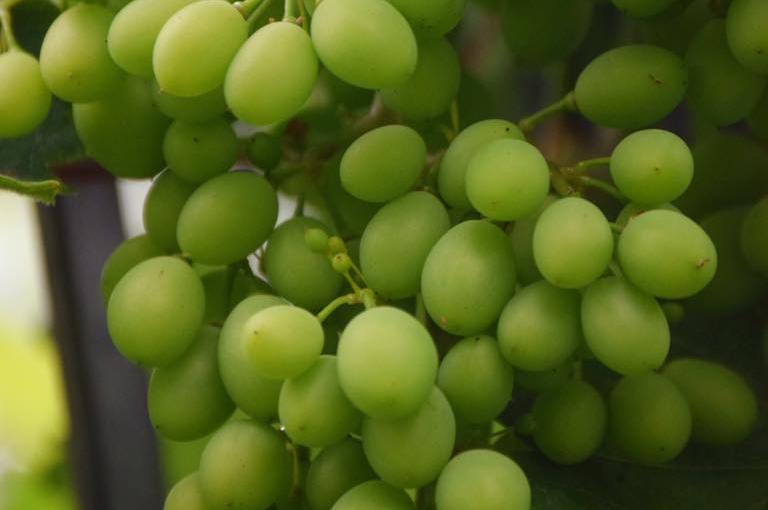
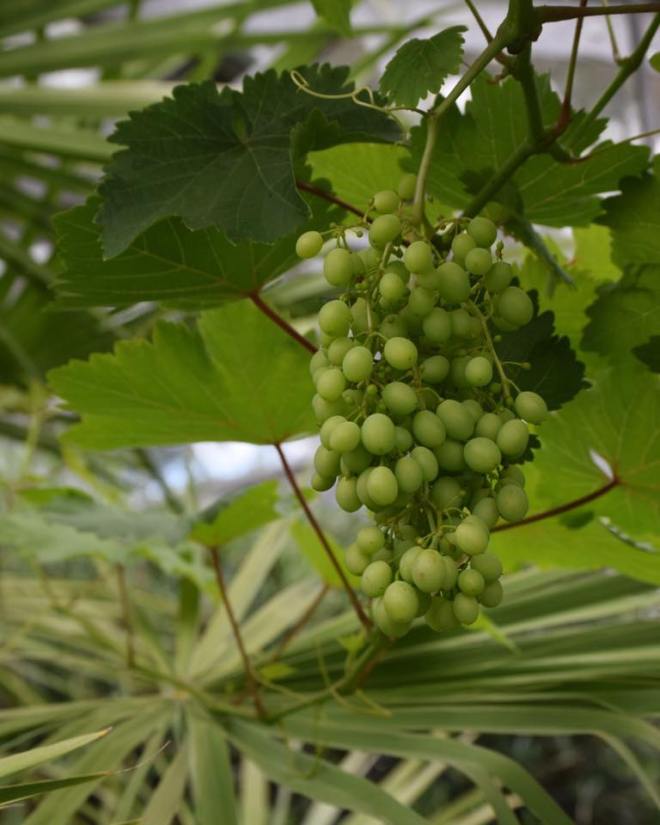
There is one key factor to remember when you want to grow grapes…this is sunlight. This ensures the juicy grapes ripen properly. Their climbing habitat makes them easy grow up walls, trellis or over arches.

There are basically two types of grape – wine and dessert. Dessert grapes require a conservatory or greenhouse to ensure plenty warmth for the sweet grapes to ripen. In some situations dessert vines can be planted outside but with their branches trained inside a greenhouse window. The benefit of this method is the vine will not require as much water compared to one growing inside.

Ensure that you water the vines frequently particularly during the growing season. Feed them with a high potash fertiliser. Dessert grapes should be thinned out to promote larger bunches which allows sunlight and air circulation into the vine. Dessert grapes need a period of dormancy to promote fruiting meaning the greenhouse or conservatory should be kept unheated over winter, then benefit from extra heat supplied in early spring of 16C.

Powdery mildew can be an issue with grapes but resistant varieties are now available. Remove flowers from young vines each year to prevent the young vine over producing before it has matured. Some grapes can also provide beautiful fall colour. Their large attractive leaves can turn crimson, purple, bronze and pink this adds additional interest to your garden wall or fence.

Grapes are ready to harvest when they are soft to touch and taste sugary. Best eaten fresh but if you cut off the branches they can be stored in a fridge for two weeks.

Wine grapes are suitable for cultivation outdoors – these tend to be less sweet and produce small clusters of acidic aromatic grapes. Plant your vine in a sheltered position that receives plenty of sunlight. A south or south west facing fence or wall is ideal. However, they can also be grown in rows which can be on a slope angled to the sun. Avoid planting in frost pockets as new growth can be easily damaged in a frost. Grapes can grow on a wide range of soils as seen from the famous wine regions of the world but drainage is critical. Also avoid soils that are too nutrient rich which might promote lush growth and prevent fruiting.


20374355_1530583450334879_6873705086252334013_n

Backhouse Garden at Rossie Estate

Step into this tranquil garden which is inspired by art and science with views to the Lomond Hills. A beautiful restored walled garden awaits and the Backhouse National Collection of Narcissus. Visiting the garden you discover and learn about the horticultural legacy of the important family of botanists and bankers. They enhanced the world of horticulture with their important introductions of plants. As soon as you enter the walled garden a beautiful Victorian greenhouse welcomes you. Here the visitor can also peer inside the traditional potting shed full of charm and historic character. During the summer months the garden is full of vibrant flowers smothered in bees. In one area is a pathway that is designed to resemble the structure of DNA.  Composed of cobblestones in the shape of a double helix and inlaid with crushed white shells. There is a mown labyrinth, water feature, sculpture and fruit trees within this peaceful space. Outside the walled garden are woodland trails, remains of a Covenanter’s tomb and a putting lawn for families. It is said that Mary Queen of Scots hunted wild boar through the woodlands of the Rossie Estate in the historic Kingdom of Fife. This highlights again the historic significance of the garden and surrounding estate. The garden is open April – September 10am – 4pm (Wed – Sunday). This garden is a delight to visit and certainly worth a repeat visit as it develops.  For further information please visit the website.

Roscoea

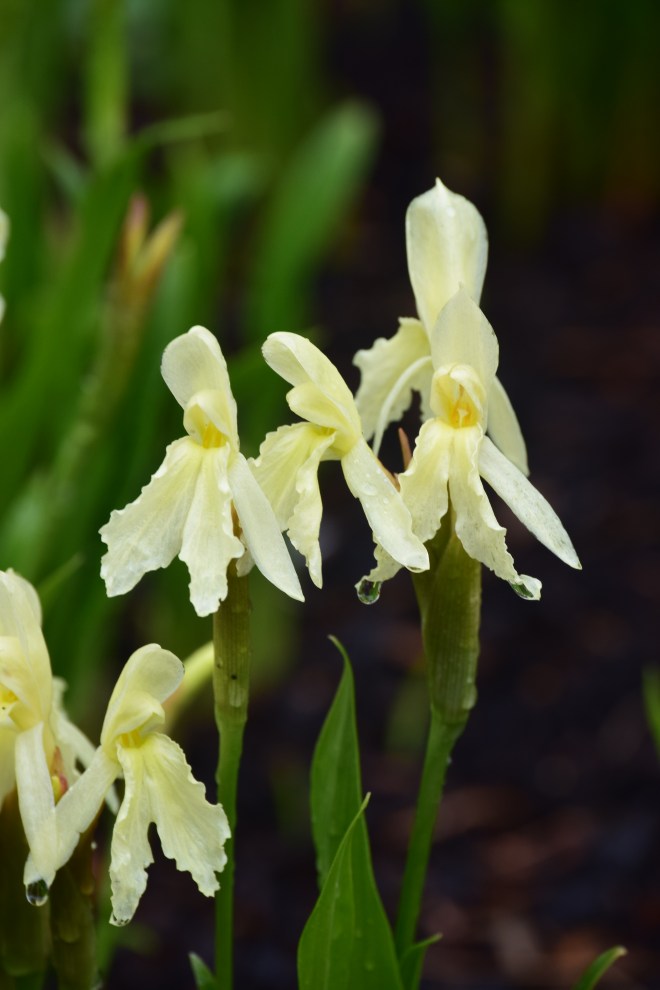
These exotic looking flowers are actually easy to grow in your garden here in the UK as they are fully hardy and put on a fantastic display. This little known genus is a tuberous perennial known for its dramatic flowers and its tolerance of wet and shady conditions. It belongs in the Zingiberaceae family (Ginger family) and originates from high altitudes of China and the Himalayas. There are 22 recognised species, with eight of them endemic to China. The genus was named by James Edward Smith after William Roscoe, a botanist who helped establish Liverpool’s Botanic Garden. The striking flowers are similar to those of orchids and irises because of their unusual hooded upper petal and three lower petals. If you look closely there is lip like landing pad for pollinating insects. These plants do best in shade where the flowers will last longer for about 4-6 weeks. They can tolerate some sunlight but exposure to hot sun and dry conditions will cause them to shrivel. When planting make sure the tubers are planted deep beneath the soil. Cover with mulch to help feed the plant and ensure the soil is moist during the summer months, but they require good winter drainage. These flowers grow well in a rock garden, woodland or shaded border. Roscoea can be divided every 3 – 4 years in April before the tubers start to grow.

DSC_0009

Wild Garlic

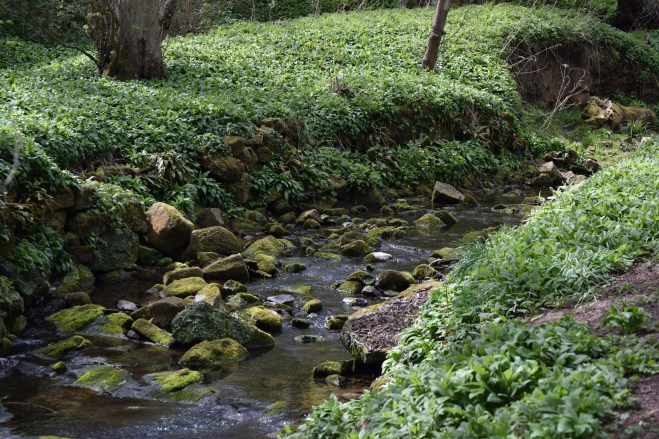
Allium ursinum carpets ancient woodlands in the UK each Spring. It makes a beautiful sight  – but did you know it is also edible? Broad leaved wild garlic, or more commonly known as Ramsons grows up to 45cm in height in damp woodland. Both the leaves and flowers are edible. Leaves appear in March and taste delicious when picked young. The white flowers emerge in April to June. All parts of the plant have a potent garlic scent and can even be smelt in the woods whilst walking. It was used traditionally throughout European countries as a spring tonic due to its blood purifying properties which is also thought to lower cholesterol. In addition it was occasionally used as a disinfectant. Despite its strong smell it has a more mellow taste than conventional cooking garlic.  It spreads by underground bulbs though take care where you plant it as it can spread easily.  Why not whizz up olive oil, parmesan, pine nuts and young leaves to create your very own wild garlic pesto? You can find lots of other recipes on the BBC Good Food website. 

DSC_0532