The Jade Vine

A truly striking flower, Strongylodon macrobotrys, will stop you in your tracks! A rare woody tropical vine scarcely seen in nature with petals of an iridescent turquoise colour. The flowers hang in pendant trusses (pseudoracemes) which can reach up to 3m long and 6cm across. Native to the damp rain forests of the Philippines the vine can grow up to 18m long and has leaves comprised of three leaflets. The seed pods contain 12 seeds and are produced in fleshy pods that reach around 15cm in length.  Found in the Leguminosae or Pea family it is pollinated by bats. Sadly deforestation is threatening this species in its native habitat. It is now a rare sight to see this plant species growing in the wild. Fortunately several UK  Botanic Gardens have had success growing it and persuading it to flower. This is not an easy species to flower, pollinate and set fertile seed in cultivation. Expert horticulturists mimic bats which would visit the flowers at night to drink nectar through hand pollination. The bats would hang upside down to drink the nectar whilst they do this their head would brush against pollen. As the bats visit other flowers the pollen is transferred onto the female parts of the next flower that the bat visits resulting in pollination. This demonstrates co-evolution and how the bat and plant species have evolved to work together. The woody tropical vine can also be propagated by nodal cuttings.

IMG_3321

The Pride of Madeira

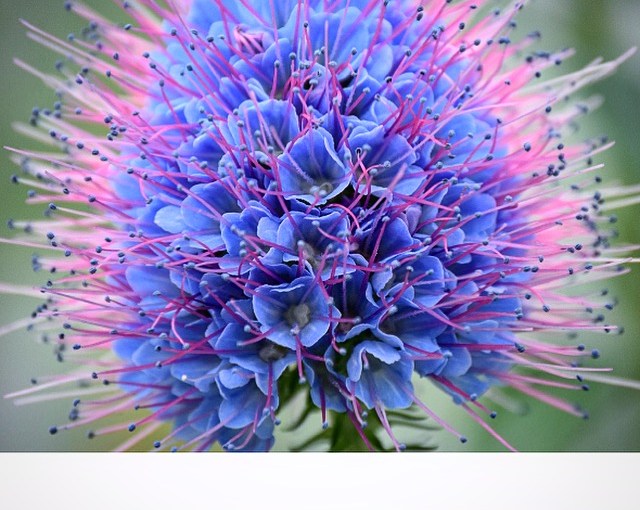
Echium candicans, also known as Pride of Madeira, is certainly a wow factor endemic plant from Madeira. It has tall iridescent flower spikes covered in clusters of blue flowers that typically emerge in late spring through green-grey whorled leaves. Described as a shrubby perennial it is found in the plant family Boraginaceae. There are 40 known species of Echium in the world, which come from parts of Asia and the Mediterranean regions in Europe. Within the genus the flowers come in shades of blue, pink, red and white with tubular flowers and beautiful protruding stamens.  This stunning plant may reach up to 2m tall with a spread of 1.2m. Outside of the island of Madeira it can easily be mistaken as a native in some coastal areas of California. Today it is grown world wide as an ornamental garden plant. Wonderful for pollinators it grows well beside the coast in frost-free conditions, as it is not full hardy. The soil should be free draining and in full sun. Echium candicans dislikes hard pruning but when young can be lightly tip pruned. This will keep a rounded structure that if left alone would become woody and irregularly shaped.  Due to its short-lived habit it sets seed easily, so collect the seed once it has dried on the plants. Cuttings can be taken in late May/June after flowering – make sure watering is carefully balanced to prevent the cuttings from rotting. All Echium species are known to be toxic if eaten. The leaves and stems may cause skin irritation so do wear protective clothing at all times.

IMG_3065


Iris tuberosa

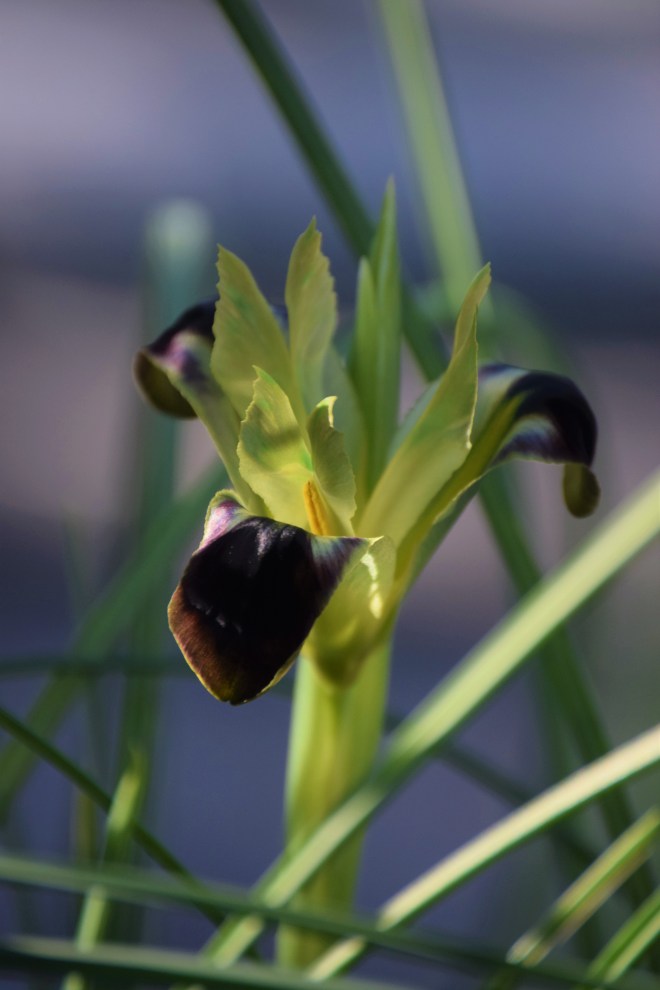
Iris tuberosa is a striking, elegant, enchanting flower for your garden in late winter and early spring. It has had its name changed a few times but is now classified as Iris tuberosa and more commonly referred to as “widow iris” and “snake’s head iris”. It originates from Southern Europe, being found in Greece, Spain and Turkey. In some mild  parts of the UK the first flower spikes appear with green and black markings which are very rarely seen in nature. It also has a slight fragrance that intensifies in the sun or a warm room, making it a great flower in a vase. Like many native Mediterranean plants, it puts up with pretty poor soil, which makes it ideal on chalk. All it really needs is late winter and spring rain, followed by a thoroughly good baking in summer, when the foliage will die down and disappear.  Try growing it in a sheltered spot which isn’t too shady. Good companions are other early spring flowers such as snowdrops, crocuses and hellebores.

DSC_0655

Lathraea clandestina

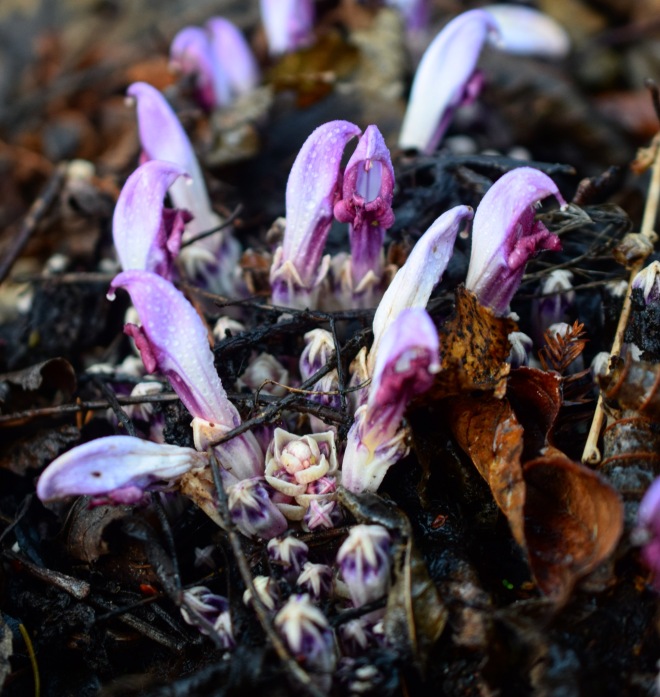
Purple Toothwort or Lathraea clandestina is a perennial root parasite that lacks chlorophyll like normal plants that photosynthesise. Lathraea clandestina is now becoming more common in cultivation as an attractive garden specimen for spring. This is due to its unusual flowers that are similar to purple crocuses. Native to Belgium, France, Spain and Italy it has been introduced  in a number of countries, including Britain and New Zealand, where it has naturalised. The flowers are bisexual and produce large amounts of nectar which results in bumblebees pollinating the flowers. The purple-violet flowers contain four stamens and one style with two stigmas. This root parasite is  typically found on Populus and Salix. However it has been found growing on a wide range of other plants in the wild and in cultivation, including Acer, Alnus, Buxus, Carpinus, Corylus, Juglans, Metasequoia, Rhododendron, Taxus, and even in some cases Gunnera. Lathraea clandestina grows best in a shaded woodland where the soil does not dry out and where roots of a likely host are found growing. It can be propagated from seeds scattered at the base of a suitable host tree, or mixed with the soil as soon as the seeds are ripe. Another form of propagation is by division. A small clump can be detached from the parent plant and placed near the roots of the chosen host. Be careful the roots can run deep and are extremely brittle. It likes to be mulched with leaf mould in autumn. It is not the plant of choice for instant effect in the garden as it is can sometimes take ten years before a flowering shoot emerges above the ground – but it is well worth the wait!

img_1447

The Cactus Garden, Lanzarote

When did the Cactus become so cool?

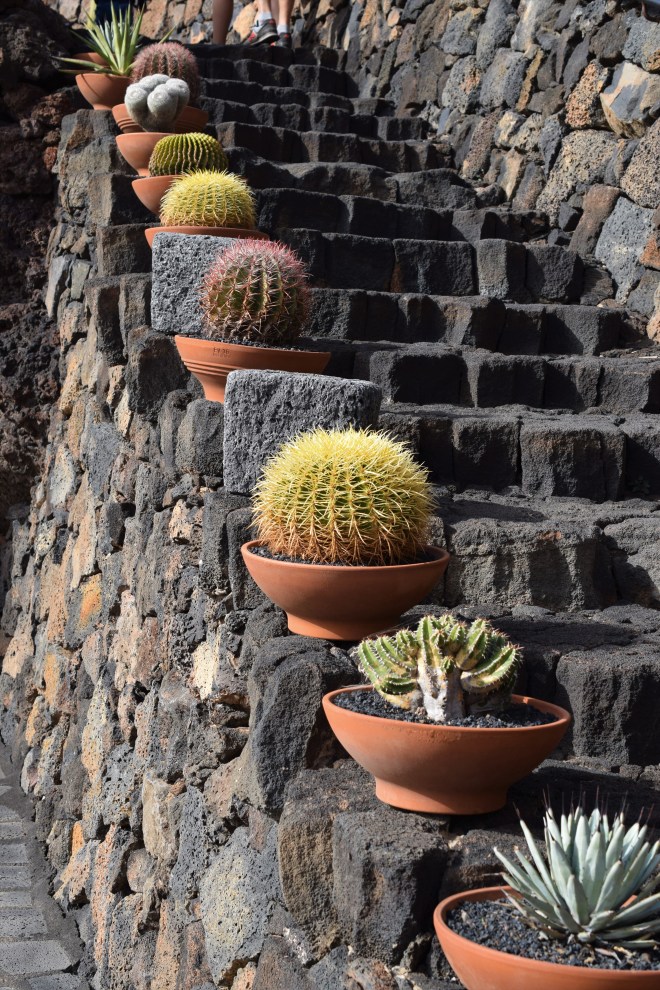
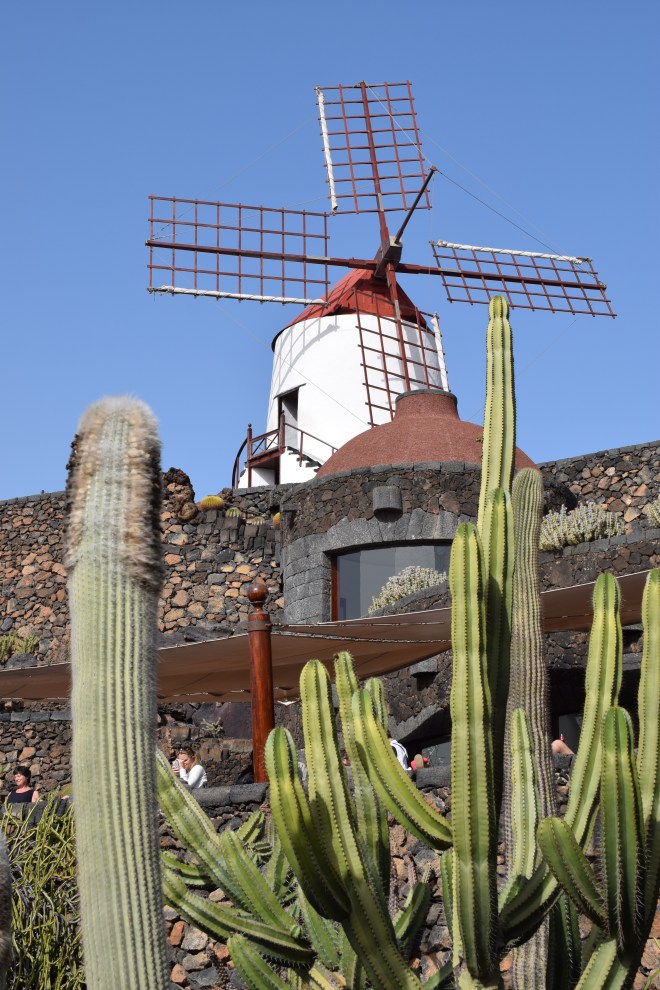
Every hipster who loves cacti must get themselves to Lanzarote’s Jardin de Cactus. Situated  in a disused quarry within Lanzarote’s volcanic landscape there are over 1,100 species of cacti. The oustanding garden was designed by Cesar Manrique, a famous artist and architect. Cesar’s design philosophy was to work in harmony with nature and from a young age he was totally consumed by the unique beauty of the island’s landscape. The garden is extremely impressive  and highlights the diversity of cacti and succulents on our planet. There are towering giants to tiny spiny balls and visitors will have their eyes opened to another world which meanders through volcanic pools and soils. This garden is the best of art and nature combined incorporating lava rocks and the use of black volcanic sand to highlight the planting. Look closer and you will notice cacti motifs incorporated into the brass work, door handles and even the spectacular light fitting in the restaurant. Paths lead up to  a windmill, restaurant and these look over the breathtaking amphitheatre. In the warmth of the sunken quarry many plants are featured in stylish containers, terraces and on steps.

dsc_0140

dsc_0217

dsc_0080


Metasequoia glyptostroboides

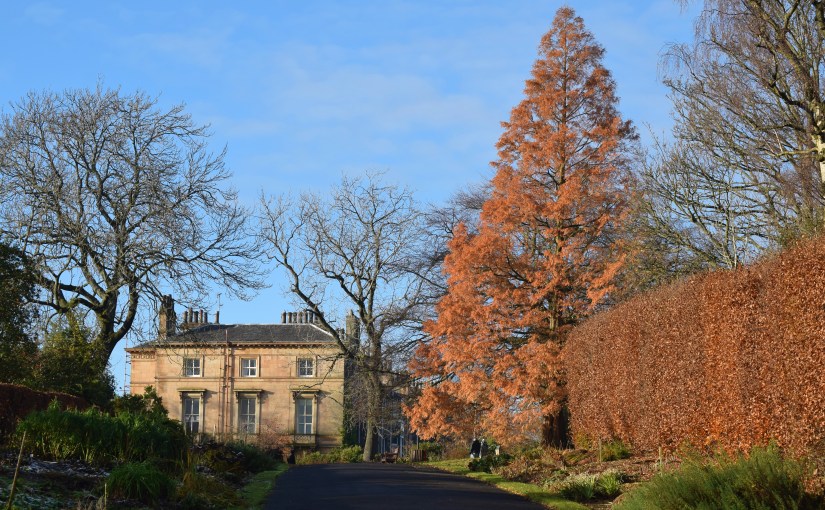
The Dawn Redwood is a beautiful deciduous, coniferous tree growing into a conical shape. The tree has lovely fern like foliage which is soft to touch and the leaves which are bright green in spring and deep green in summer eventually turn a copper bronze in Autumn. It makes a wonderful landscape specimen or it can be kept in a smaller container for a smaller garden. It has strong all year round interest and prefers a damp habitat.  It is also one of the most exciting plant discoveries during the last century. The name meta means ‘meta’ and ‘sequoia’ means relating to the fossil specimens when it was first discovered. In the wild it is found in only a small area of China.  This tree was found orginally by a local forester and this led Professor Cheng of the National Central University, China on an expedition to a remote village in the Szechuan province around 1941. At first it was thought to be extinct for 5 million years but research into the prehistoric fossil records indicates that this tree existed 50,000,000 years ago! Seeds of  Metasequoia glyptostroboides were collected in 1947 by an expedition sponsored by the Arnold Arboretum of Harvard University, USA and then distributed amongst botanic gardens around the world.. As a result the species is classified by the World Conservation Union as “critically endangered” because it is threatened from intensive rice cultivation and the poor prospect of regeneration in its wild habitat.

dsc_0163

Kokedama

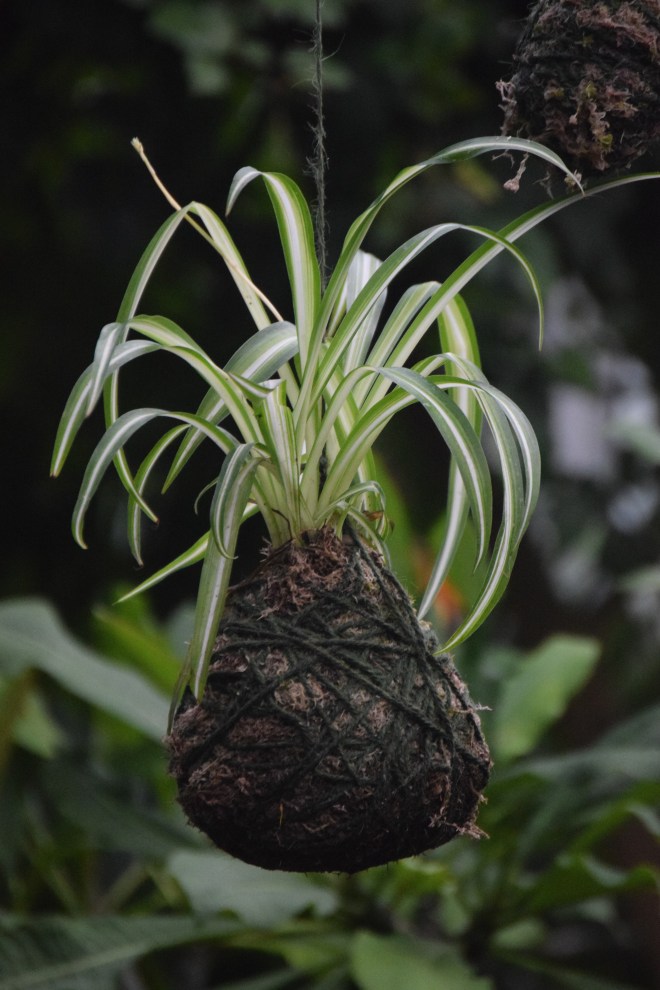
The art of Kokedama is becoming increasingly popular in the UK and is a simple and highly adaptable design concept.  Kokedama is a Japanese technique that means “moss ball” – it is the art of binding plants to create string gardens and can be traced back centuries.  These living plant moss balls suit any space inside or outside your home. You can experiment with this innovative plant design – they are perfect for small urban spaces, the plants can live for years and do not require repotting.  To make a Kokedama you will need soil, string, a plant and moss. Firstly mould the soil round the roots of the plant – wet sandy soil works best. Then bind the soil ball with moss and secure with string keeping it tight. Select plants that are evergreen like ferns or choose seasonal plants and change the display more frequently. Then hang up with a piece of string in your desired location. Soak them once a week in a bucket of water. You can also add liquid fertiliser to the water to feed your plant. Have fun and get creative!


dsc_0705


Kirengeshoma palmata

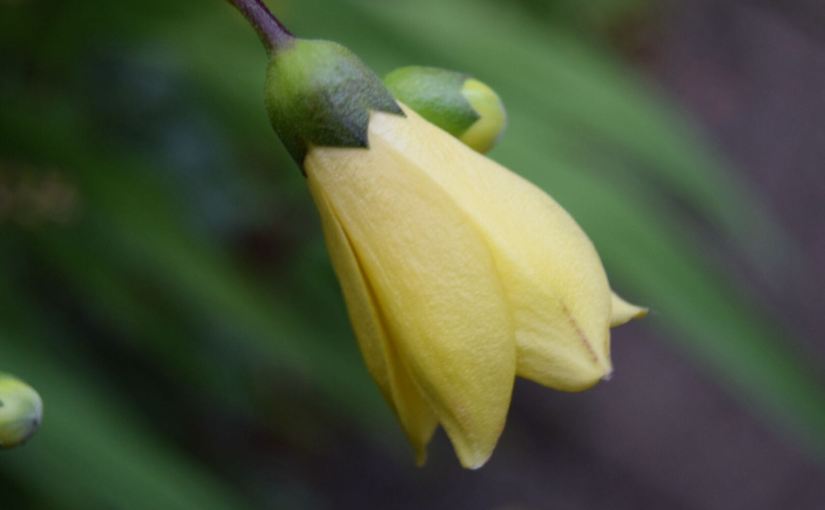
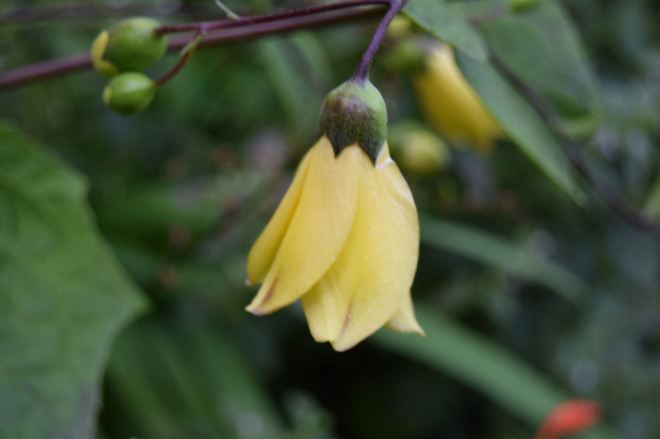
If you need a plant for Autumn colour in a very shady spot this is the best you can grow. It is also known as yellow wax bells and belongs in the plant family Hydrangeaceae. It has tall elongated stems that have yellow hanging trumpet flowers. Some people have described the flowers as being similar to those of a shuttlecock. These can reach up to 2ft when blooming – the rest of the year it is just a basal clump of leaves. The leaves are irregularly cut and similar to those of maple leaves. It also has attractive purple stems and prefers to grow in an acid soil and will thrive in cold, damp, humus rich conditions. It will need shelter from wind so grow in a protected area.   Check for slug and snail damage on young growth. Kirengeshoma orginates from Japan and Korea where it is found growing in damp woodland. It will come up year after year and slowly increase in size and can be divided  to create new plants, or can be grown from seed. Gather seed when ripe and put in pots, then place in the cold frame over winter – germination will occur in spring. This plant was given an RHS award of Garden  Merit in 2012.

img-20160919-wa0009


Planters for Autumn

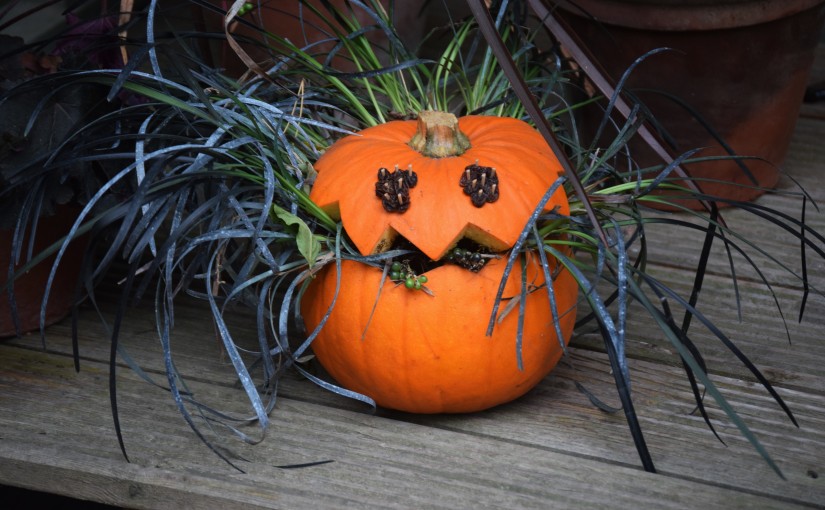
Ditch your boring Autumn planters this year and step up your pumpkin decoration skills. Unleash your creative flair in your house, garden and at your door. Try planting up your pumpkins with plants of all kinds. Pumpkins can be large or small and integrated with shrubs and perennials for interest. You could use all forms of grasses, mini succulents, or floral arrangements displayed within the pumpkin. Use moss or normal potting compost to support the plants in the hollowed out pumpkin. Your designs can be classic planters that are autumn inspired or have fun with Halloween influences. Ophiopogon nigrescens is a black grass which can be used and contrasts perfectly against the orange skin of the pumpkin to give that spooky effect. Once decorated the Autumn planters can be displayed indoors or outside and should last for the month of October.